You write “unkept”, pause for a second, and suddenly it does not look right.
That moment of doubt is common.
The confusion between unkept or unkempt catches many writers because “unkept” feels like the natural opposite of “kept.” It follows the same pattern as words like unknown or unfinished, so it looks correct at first glance. But English does not always follow the rules we expect.
In this case, the word that sounds more logical is actually the wrong one.
If you have ever wondered whether to write unkept or unkempt, the answer is simple: only one of them is correct in standard English. Knowing the difference can save you from a very common spelling mistake and make your writing look far more polished. Let’s clear it up once and for all.
Unkept Or Unkempt: Which Spelling Is Correct?
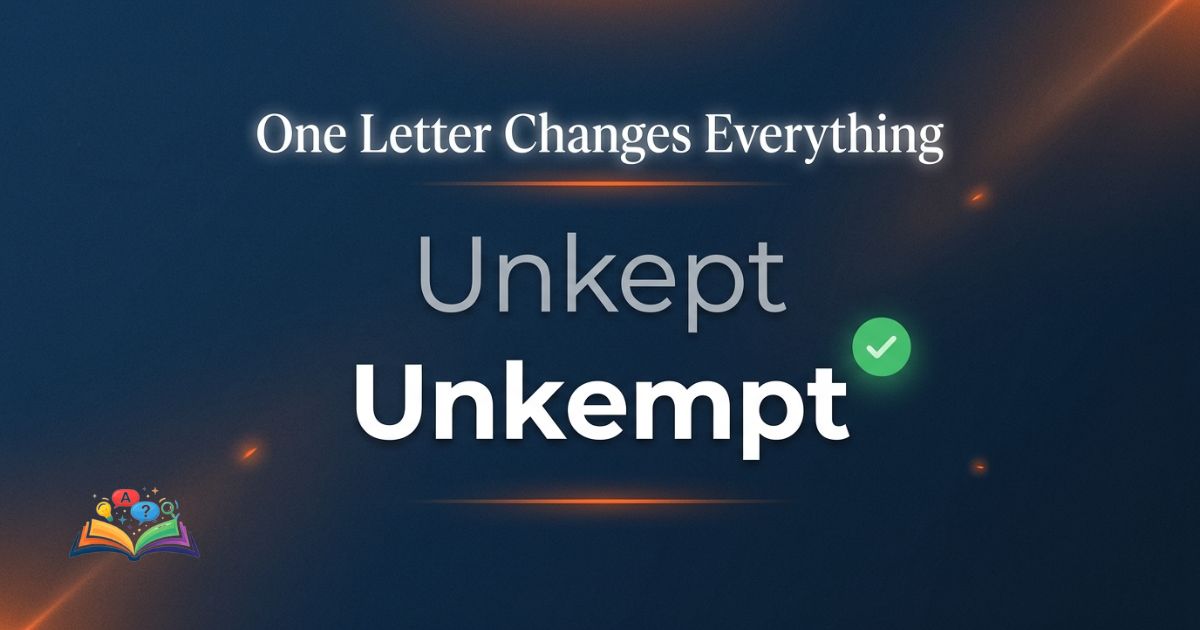
The correct spelling is “unkempt.” It is the standard English word used to describe something messy, untidy, or not well cared for.
“Unkept” is incorrect when describing someone’s appearance, hair, clothing, or anything neglected.
For example:
- Correct: His hair looked unkempt after the trip.
- Incorrect: His hair looked unkept after the trip.
If you are trying to choose between unkept or unkempt, always use “unkempt.”
The Correct Form You Should Use
Use “unkempt” when describing:
- untidy hair
- wrinkled clothes
- neglected lawns
- messy appearance
Examples:
- She arrived with unkempt hair and dusty shoes.
- The front yard looked wild and unkempt.
This kind of spelling confusion is common in English, especially with words that sound alike but follow unexpected rules, much like the difference between role and roll.
The Incorrect Form Many People Assume Is Right
Many people write “unkept” because it seems like the natural opposite of “kept.”
For example:
- kept room
- unkept room
It feels logical, but English does not recognize “unkept” as the correct adjective here.
This is similar to other confusing word pairs like roster and roaster, where one small spelling change completely alters correctness.
Why “Unkept” Seems Logical But “Unkempt” Is Correct
The confusion happens because English often forms opposites by adding “un” before a word:
- known → unknown
- paid → unpaid
- finished → unfinished
Following that pattern, “kept” → “unkept” seems reasonable.
But this word follows a different path.
Why Writers Naturally Expect “Unkept” To Be A Word
Writers trust familiar spelling patterns.
Because English gives us words like:
- untold
- unseen
- unpaid
it feels natural to assume “unkept” should also be correct.
This same kind of pattern confusion appears in spelling choices like bingeing or binging, where the simpler-looking form is not always the only acceptable one.
How “Unkempt” Developed As The Accepted Form
The word “unkempt” comes from the older word “kempt,” which meant well-combed or neat.
Although “kempt” is rarely used now, “unkempt” remained in everyday English.
That is why “unkempt” is still correct today, even though “unkept” looks more natural.
This kind of historical spelling confusion also happens in pairs like parenthesis and parentheses, where word forms do not behave as people expect.
Unkept Vs Unkempt In Sentences: The Difference Made Clear
One of the easiest ways to understand the difference is to see the words used in real examples.

Correct Examples Using “Unkempt”
These sentences use the correct spelling:
- His beard looked rough and unkempt.
- The abandoned garden was overgrown and unkempt.
- She felt embarrassed by her unkempt appearance.
- His clothes were wrinkled and unkempt.
Here, “unkempt” means untidy or neglected.
Mistakes like this are similar to confusing stationary and stationery, where the pronunciation may sound alike but the spelling changes the meaning.
Incorrect Examples Using “Unkept”
These examples are incorrect:
- His beard looked unkept.
- She had unkept hair.
- The lawn seemed unkept.
These may sound understandable, but they are not correct standard English.
The same type of mix-up happens when writers confuse peel and peal because both sound identical but only one fits the sentence.
Why People Confuse Unkept And Unkempt So Easily
The confusion is simple: “unkept” looks familiar, while “unkempt” looks unusual.
People naturally trust what looks familiar.
The Influence Of Familiar Word Patterns
Since English has many words like:
- unpaid
- undone
- unseen
people expect unkept to work the same way.
That is why many writers make this error.
This kind of expectation leads to many common mistakes, such as mixing up waisted and wasted in writing.
Why Rare Spellings Cause More Mistakes
Because “kempt” is uncommon, “unkempt” feels strange.
When a word looks strange, people often replace it with a spelling that seems easier.
That same confusion happens with emotional words like griefing and grieving, where familiar patterns can mislead writers.
The Right Choice Between Unkept And Unkempt
If you are unsure which word to use, the rule is simple:
Use “unkempt.” Avoid “unkept.”
That one rule will keep your writing correct.
A Simple Rule To Remember The Correct Spelling
Remember this:
Messy or untidy = unkempt
If you are describing hair, clothes, grass, or appearance, “unkempt” is the correct choice.

Writers often need these quick rules in the same way they learn punctuation rules for Monday’s or Mondays.
When To Use “Unkempt” In Everyday Writing
Use “unkempt” when describing:
- messy hair
- untidy clothing
- overgrown lawns
- neglected spaces
Examples:
- He looked unkempt after the hike.
- The garden remained unkempt for weeks.
Final Clarity On Unkept Or Unkempt
The confusion between unkept vs unkempt happens because “unkept” seems like the natural opposite of “kept.”
But the correct word is “unkempt.”
To remember it:
Use “unkempt” for anything messy, untidy, or neglected.
Avoid “unkept” in standard writing.
English is full of these confusing word pairs, whether you are choosing or deciding between unkept and unkempt, but once you learn the rule, the right choice becomes easy.
Common Questions About Unkept Or Unkempt
Is “Unkept” Ever Grammatically Correct?
In modern standard English, “unkept” is generally considered incorrect when describing something untidy.
Use “unkempt” instead.
Why Is “Unkempt” Correct Instead Of “Unkept”?
Because “unkempt” comes from the older word “kempt,” and that historical form remained standard.
Is “Unkempt” A Real English Word?
Yes, “unkempt” is a valid English word meaning messy or not cared for.
Why Does “Unkept” Look More Correct?
Because it follows familiar patterns like unpaid and unknown, even though the accepted word is “unkempt.”
Is “Kempt” Still Used Today?
Yes, but very rarely. Most people only use “unkempt.”
Can “Unkempt” Describe Places As Well As People?
Yes. It can describe gardens, lawns, rooms, or any neglected place, not just a person’s appearance.