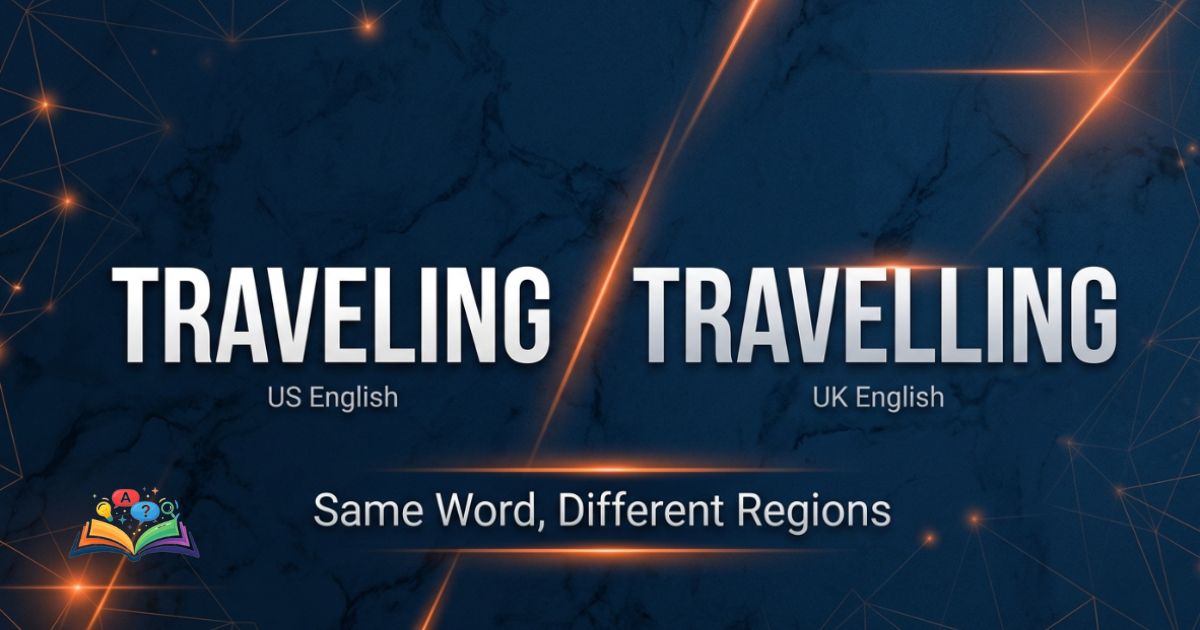
If you are unsure whether traveling or travelling is correct, the answer depends on which version of English you use. In American English, traveling is the standard spelling. In British English, travelling is the preferred form.
This spelling difference causes confusion because both versions are correct within their respective language standards. This guide explains why the spellings differ, where each one is used, how major style guides handle them, and how to avoid mistakes in your writing.
Why Traveling And Travelling Have Different Spellings
The difference comes from how American and British English handle certain verbs when suffixes are added.
British English often doubles the final l before adding endings such as -ing or -ed. American English usually keeps a single l when the final syllable is not stressed.
| American English | British English |
| Traveling | Travelling |
| Traveled | Travelled |
| Traveler | Traveller |
| Traveling Agency | Travelling Agency |
This pattern appears in many spelling differences discussed in our guide to British and American English spelling differences.
Traveling Vs Travelling Across Major English-Speaking Countries
Different countries follow different spelling conventions based on historical and educational standards.
| Country | Preferred Spelling |
| United States | Traveling |
| United Kingdom | Travelling |
| Australia | Travelling |
| New Zealand | Travelling |
| South Africa | Travelling |
| India | Travelling |
| Canada | Travelling (more common) |
Canada sometimes accepts both forms, but travelling generally appears more often in government, education, and media writing.
This variation is similar to other spelling pairs such as color vs colour and honor vs honour.
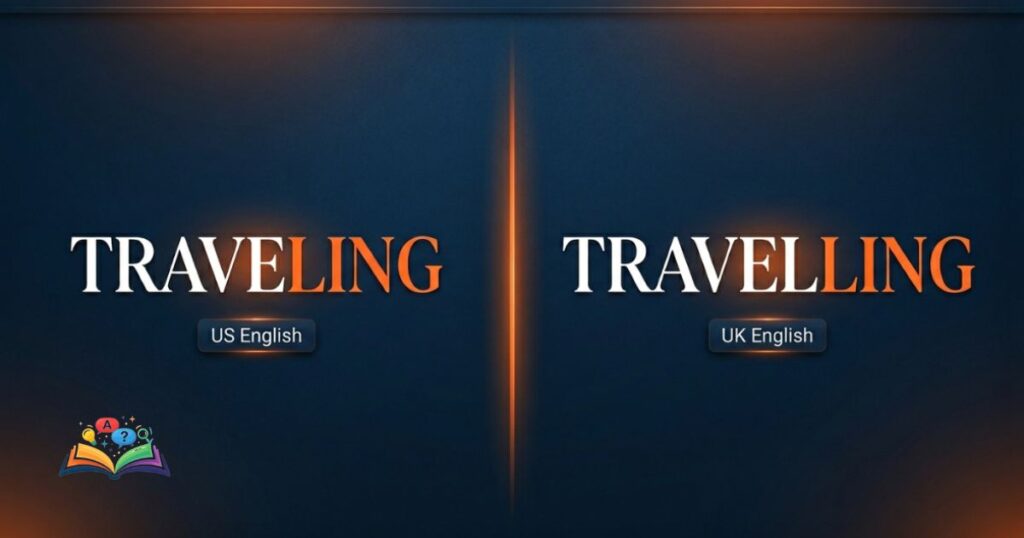
Is Traveling Or Travelling The Preferred AP Style Spelling?
The Associated Press (AP) Stylebook follows American English conventions.
As a result:
- Traveling is correct in AP Style.
- Traveled is correct in AP Style.
- Traveler is correct in AP Style.
- Travelling, travelled, and traveller are generally avoided in AP-style writing.
If you write for US newspapers, blogs, business websites, or marketing materials, use traveling unless a publication specifies otherwise.
How The Verb Travel Changes Into Traveling And Travelling
The spelling difference becomes easier to understand when you look at the underlying grammar rule.
American English typically avoids doubling the final consonant when the stress is not on the last syllable.
- TRAV-el → traveling
- TRAV-el → traveled
British English often doubles the final l regardless of stress.
- TRAV-el → travelling
- TRAV-el → travelled
This is why both forms developed and remain accepted within their respective language systems.
Traveling Or Travelling In Dictionaries And Style Guides
Major dictionaries reflect regional preferences.
| Dictionary Or Style Guide | Preferred Form |
| Merriam-Webster | Traveling |
| AP Stylebook | Traveling |
| Chicago Manual Of Style | Traveling |
| Oxford English Dictionary | Travelling (UK) |
| Cambridge Dictionary | Both Accepted |
| Collins Dictionary | Both Accepted |
Most modern dictionaries recognize both spellings and label them according to region.
Traveling Vs Travelling In Real Sentences
The easiest way to remember the distinction is to see the words used naturally.
Traveling In A Sentence Using American English
American English uses the single-L form.
Correct examples:
- I will be traveling to California next month.
- She enjoys traveling during summer vacations.
- They are traveling across the United States by car.
Incorrect for standard American usage:
- I will be travelling to California next month.
Travelling In A Sentence Using British English
British English uses the double-L form.
Correct examples:
- He is travelling through Scotland this year.
- We enjoy travelling by train.
- They spent months travelling around Europe.
Incorrect for standard British usage:
- He is traveling through Scotland this year.

Common Writing Mistakes When Choosing Traveling Or Travelling
Many mistakes happen when writers switch between American and British spelling conventions.
Common errors include:
- Using traveling in one paragraph and travelling in another.
- Mixing traveled and travelled in the same document.
- Following AP Style while using British spellings.
- Copying text from sources that use different regional standards.
A simple solution is to choose one style and apply it consistently throughout your document.
Traveling Or Travelling In Basketball: Why The Meaning Changes Completely
In basketball, traveling does not refer to a trip or journey.
Instead, it refers to a rules violation that occurs when a player moves their feet illegally while holding the ball.
Examples:
- The referee called traveling after the player took too many steps.
- Traveling is one of the most common violations in basketball.
In this context, the word relates to sports rules rather than transportation or movement between places.
Related Words That Follow The Same UK And US Spelling Pattern
Travel is not the only word affected by this spelling rule.
| American English | British English |
| Traveled | Travelled |
| Traveler | Traveller |
| Traveling | Travelling |
| Labeled | Labelled |
| Labeling | Labelling |
| Canceled | Cancelled |
| Canceling | Cancelling |
Understanding this pattern helps with many other UK and US spelling differences.
Popular Expressions And Alternatives To Traveling Or Travelling
Travel-related language includes many common phrases and substitutes.
Popular expressions:
- Safe travels
- Happy travels
- Bon voyage
- Have a great trip
- Enjoy your journey
Alternative words for traveling:
- Journeying
- Touring
- Exploring
- Roaming
- Trekking
- Commuting
- Voyaging
One common mistake is writing save travels instead of safe travels. The correct phrase is always safe travels.
Final Clarity On Traveling Or Travelling
For American audiences, use traveling. For British audiences, use travelling.
Neither spelling is incorrect. The key is consistency. If your content targets readers in the United States, schools, businesses, publishers, and style guides will generally expect traveling.
When in doubt, match the spelling style of your audience, publication, or organization.
Common Questions About Traveling Or Travelling
What Is Correct, Traveling Or Travelling?
Both are correct. Traveling is American English, while travelling is British English.
Is Canadian Spelling Traveling Or Travelling?
Canadian English generally prefers travelling, although both forms may appear.
Can We Say Traveling In Formal Writing?
Yes. Traveling is fully correct in formal American English writing.
What Does Traveling Mean Outside Of Spelling Discussions?
Traveling means moving from one place to another, usually for work, leisure, or personal reasons.
Why Do American And British English Spell Travel Differently?
The difference comes from separate spelling conventions that developed over time in American and British English.
How Do You Spell Traveling Or Travelling Correctly In Academic Writing?
Use the version required by your institution’s style guide. American schools typically use traveling, while British institutions use travelling.
Is Traveling Or Travelling Accepted Worldwide?
Yes. Both spellings are recognized internationally, although regional preferences differ.
What Is The Best Alternative Word For Traveling?
Depending on context, alternatives include journeying, touring, voyaging, trekking, and roaming.