If you stand at a seafood market in Louisiana or sit in a restaurant in the United Kingdom, you might see the same crustacean called by different names. Whether someone says crawfish or crayfish, both terms refer to the exact same freshwater decapod crustacean. The difference comes down to regional speech, local history, and geography rather than separate biological species.
English speakers often struggle with overlapping food vocabulary, much like distinguishing between culinary liquid bases like stock or broth or choosing between dairy spreads such as butter or margarine. Understanding why these terms split across borders clears up confusion at the grocery store or dinner table.
This guide breaks down the regional vocabulary map, clarifies biological classifications, outlines flavor expectations, and answers common culinary questions regarding these freshwater crustaceans.
Geographic Dialects: Mapping Crawfish in Louisiana vs Crayfish in the UK
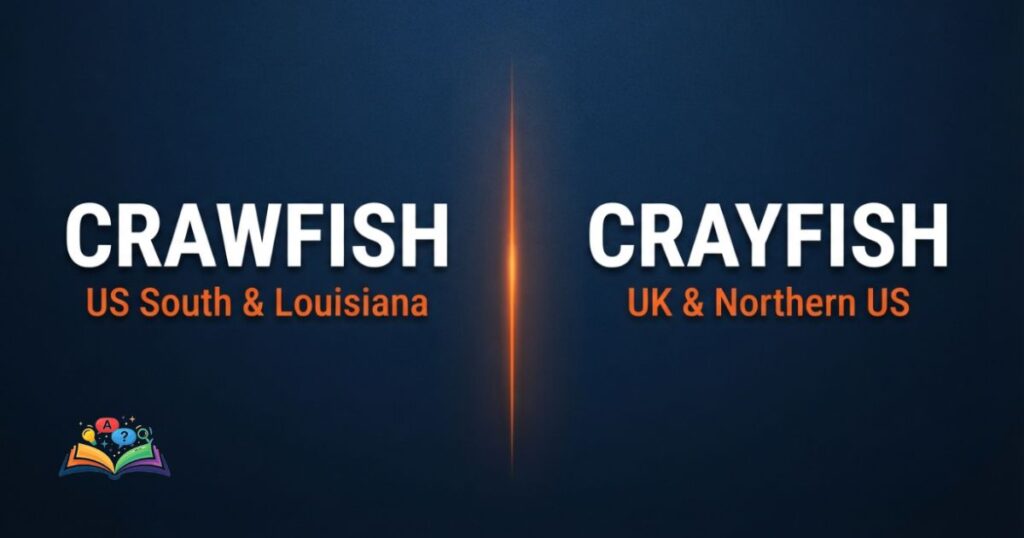
The choice between crawfish or crayfish depends on regional geography. Crawfish is the primary term used across the Southern United States, especially in Louisiana. Crayfish serves as the standard term in northern US regions, standard American dictionaries, and the UK. Crawdad is an informal dialect variation popular in the Midwest and Pacific Northwest.
Regional speech patterns shape how people talk about food, wildlife, and everyday items across different territories. Similar linguistic splits happen when comparing homophones like axle or axel or navigating bedding choices such as a duvet or comforter. Review the breakdown below to see how these names distribute across global maps.
Why Cajuns Prefer Crawfish While Brits Say Crayfish
The word traces back to the Old French term escrevisse. When British English speakers adapted the word, it evolved into “crayfish” through folk etymology, altering the ending sound to match “fish” even though the creature is not a fish. In Louisiana Cajun culture, the pronunciation shifted to “crawfish” during the 18th century. Today, Louisiana produces over 90 percent of the domestic yield in North America, solidifying “crawfish” as the dominant commercial name across the American South, while people in the UK strictly use “crayfish.”
The Southern Crawdad Territory and Regional Dialect Boundaries
Across the United States, dialect maps reveal clear geographic boundaries for each name:
- Crawfish: Dominates Louisiana, Texas, Mississippi, Alabama, and Georgia.
- Crayfish: Prevails across New England, the Upper Midwest, New York, and international English-speaking countries.
- Crawdad: Heard in parts of Missouri, Arkansas, Oklahoma, Kansas, and the Appalachian mountain region.
- Mudbug: A colloquial slang term used throughout Cajun country during spring boils.
Biological Distinction: Comparing Freshwater Mudbugs, Lobsters, and Prawns
While people often throw these terms around interchangeably, clear biological boundaries separate freshwater species from marine relatives. Just as naturalists categorize professions like a miner or geologist based on field methods, taxonomists classify crustaceans by habitat and body structures. Examine the detailed structural comparisons below.
Freshwater Crawfish vs Saltwater Lobsters and Prawns
Despite looking like miniature lobsters, freshwater crawfish inhabit streams, rivers, swamps, and agricultural ponds. True lobsters live exclusively in cold marine ocean waters and grow significantly larger. Prawns and shrimp belong to different suborders altogether, lacking the heavy front pincers typical of decapod lobsters.
| Feature | Crawfish / Crayfish | True Lobster | Prawn |
| Primary Habitat | Freshwater rivers, ponds, and swamps | Cold marine ocean beds | Coastal and inland waters |
| Average Length | 3 to 6 inches | 8 to 24 inches | 2 to 8 inches |
| Front Pincers | Prominent, symmetrical claws | Large, heavy crushing claws | Thin, slender claws |
| Water Type | Fresh water | Salt water | Fresh and salt water |
Evolutionary Lineage: Are Shrimp and Crawfish Scientific Cousins?
Yes, shrimp and crawfish share the class Malacostraca and order Decapoda, meaning both creatures possess ten jointed legs. However, they diverge at the suborder level. Crawfish belong to Astacidea along with lobsters, while shrimp belong to Dendrobranchiata or Pleocyemata.
Flavor Profile and Culinary Usage: Do Crawfish and Crayfish Taste Identical?
Because crawfish and crayfish are identical biological animals, their meat shares the exact same natural taste profile. The culinary experience comes down to habitat environment and cooking style rather than the name printed on the menu.
The meat is firm, sweet, and clean, tasting like a cross between sweet lobster meat and tender shrimp. Freshwater mudbugs harvested from muddy pond bottoms can carry a slight earthy note if not rinsed properly in clean water before boiling. In Southern Cajun cooking, cooks boil them with heavy cayenne, lemon, garlic, corn, and potatoes. In European dishes, chefs steam crayfish in dill broth or white wine.
Just as diners evaluate raw seafood options like sushi or sashimi or compare breakfast staples like waffles or pancakes, preparation method defines the final dish.
Nutritional Profile and Grocery Cost: Crawfish vs Shrimp and Lobster
Evaluating seafood involves checking both health benefits and market pricing before filling your shopping cart. Much like weighing end-of-life decisions like cremation or burial or balancing video game choices like selecting a tiller or rancher in Stardew 1.6, clear data helps buyers make informed choices. Look over the nutritional and financial breakdowns in the sections below.
Health Benefits and Protein Breakdown: Is Crawfish Healthier Than Shrimp?
Crawfish offers a lean nutritional profile. A 3-ounce serving of steamed tail meat provides roughly 70 calories, 14 grams of protein, and under 1 gram of fat.
- Low Calorie Density: Lower in calories per ounce than farm-raised shrimp.
- Rich Mineral Content: Provides B vitamins, selenium, zinc, and magnesium.
- Dietary Cholesterol: Contains moderate cholesterol levels similar to shrimp, but remains low in saturated fat.
Market Pricing Factors: Are Freshwater Crayfish Cheaper Than Lobster?
Live freshwater crayfish generally cost significantly less per pound than live ocean lobster. During peak harvest season (March through May in Louisiana), live crawfish prices range from $2.50 to $4.50 per pound locally. Prepared or boiled crawfish ranges from $5.00 to $8.00 per pound. By contrast, live Maine lobster commands $12.00 to $22.00 per pound depending on annual catch yields.
Final Clarity On the Crawfish or Crayfish Naming Debate
The choice between crawfish or crayfish comes down to regional speech rather than biological difference. If you visit Louisiana or order a Cajun boil, say “crawfish.” If you write a scientific paper, speak British English, or shop in northern states, “crayfish” works best. Using “crawdad” fits informal conversations in the Midwest or Appalachia.
Understanding these naming nuances fits into the broader study of distinctions between similar terms across the English language. No matter which name you use, the crustacean inside the shell remains identical.
Common Questions About Crawfish or Crayfish
Do Crawfish Scream When You Boil Them?
No, crawfish do not scream. They lack vocal cords, lungs, and central nervous structures capable of vocal sound production. High-pitched sounds heard during boiling stem from trapped air and steam escaping from under the shell as water heats up.
Are Crawfish Basically Bugs or Freshwater Crustaceans?
Crawfish are freshwater crustaceans, not insects. While people colloquially call them “mudbugs” due to their muddy burrows, they belong to the phylum Arthropoda alongside crabs and lobsters. They share more physical traits with marine life than terrestrial insects like a cockroach or beetle.
What Part of the Crawfish Should You Not Eat?
Avoid eating the hard outer shell, the digestive vein running along the tail, and the internal gills. The edible portions consist of the tail meat, claw meat, and the yellow liver fat located inside the head cavity.
Can You Eat the Yellow Stuff in Crawfish?
Yes, the yellow substance inside the head cavity is edible and highly prized by enthusiasts. Known as “crawfish butter,” this organ is the hepatopancreas, which functions as the liver and pancreas. It carries a rich, savory flavor.
Why Do Americans Call Crayfish Crawfish?
Americans in Southern regions altered the word “crayfish” to “crawfish” due to phonetic shifts over centuries of local dialect evolution. Early French and English settlers in Louisiana merged local accent patterns with the Old French word escrevisse, creating “crawfish.”