If you have ever paused while writing and wondered if it should be color or colour, the answer depends on the version of English you use. Both spellings are correct, but they belong to different regional standards.
In the United States, color is the accepted spelling. In the United Kingdom and many other countries that follow British English conventions, colour is preferred. This guide explains why the two spellings exist, where each one is used, and how to choose the right version for your audience.
Why Do Color And Colour Have Different Spellings?
Color and colour have the same meaning. The difference comes from the historical development of American and British English.
Quick Answer
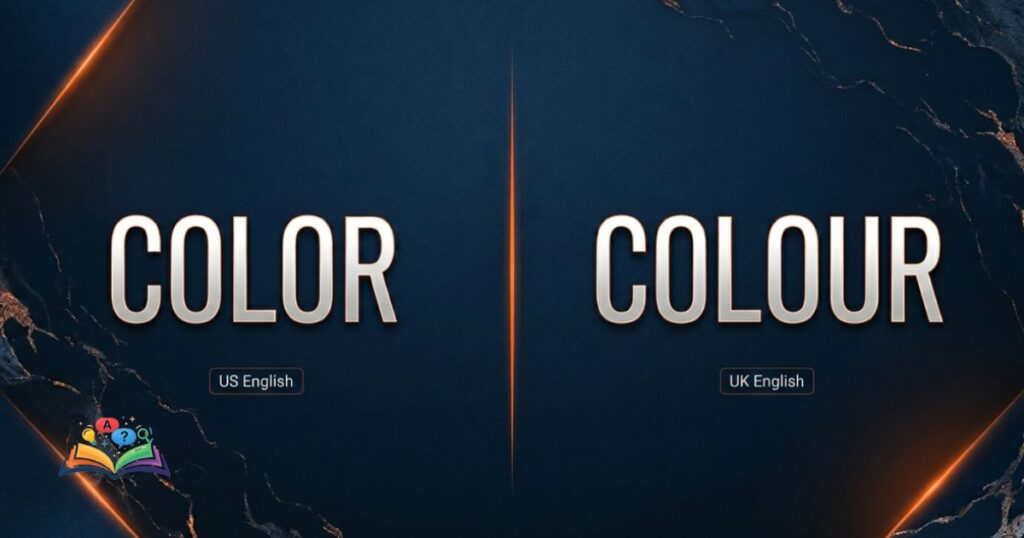
Color is the standard American English spelling, while colour is the standard British English spelling. Neither is wrong. The correct choice depends on the audience, country, or style guide you follow.
The spelling colour came from older French influences on English. During the early years of the United States, American lexicographer Noah Webster promoted simplified spellings. As a result, many words ending in -our became -or in American English.
Some common examples include:
| American English | British English |
| Color | Colour |
| Honor | Honour |
| Favor | Favour |
| Labor | Labour |
For a broader overview of spelling differences, see this guide to British and American English differences.
Color Vs Colour Across English-Speaking Countries
English-speaking countries do not all follow the same spelling standards. Check the regional usage below before writing for an international audience.
Color Or Colour In The USA
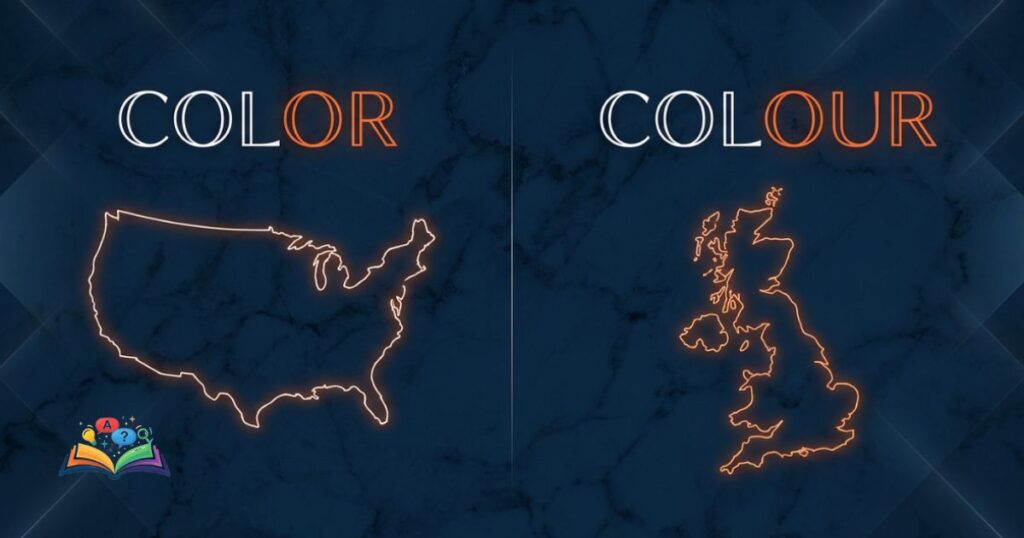
In the United States, color is always the preferred spelling.
Examples:
- The color of the car is blue.
- She chose her favorite color for the logo.
Using colour in American publications may appear inconsistent or incorrect unless the content intentionally follows British English conventions.
Color Or Colour In The UK
The United Kingdom uses colour.
Examples:
- The colour of the sky changed at sunset.
- The artist experimented with colour and light.
British publishers, schools, and newspapers generally consider color a US spelling.
Color Or Colour In Canada
Canadian English usually favors colour, although American spellings appear more frequently than in the UK.
Examples:
- The colour scheme matched the company branding.
- Canadians often use British spelling in formal writing.
Color Or Colour In Australia
Australia follows British spelling conventions, making colour the standard choice.
Examples:
- The colour of the ocean was remarkable.
- Australian schools teach the spelling colour.
Color Or Colour In Europe
There is no single European standard because many countries use English as a second language.
In general:
- British English materials use colour.
- American English materials use color.
- International organizations often choose one style and apply it consistently.
Is Color Or Colour Correct In Academic And Professional Writing?
The correct spelling depends on the style guide, institution, or publication.
In academic and professional settings:
- Use color when following American English.
- Use colour when following British English.
- Stay consistent throughout the document.
Switching between the two spellings can make writing appear unprofessional.
Several other spelling differences follow the same pattern. For example, compare honour or honor and vapour or vapor.
Color Or Colour In IELTS, TOEFL, And Other English Exams
Different English-language exams accept different standards.
- IELTS accepts both British and American English.
- TOEFL primarily follows American English conventions.
- Cambridge exams generally lean toward British English.
The most important rule is consistency.
Correct:
- My favorite color is green.
- My favorite colour is green.
Incorrect:
- My favorite color is green because I like bright colours.
Choose one style and use it throughout the exam.
Is There Any Difference In The Pronunciation Of Color And Colour?
No. Color and colour are pronounced the same way.
Pronunciation:
/ˈkʌlər/
The spelling changes, but the spoken word remains identical.
This makes the confusion purely a writing issue rather than a pronunciation issue.
Common Situations Where Writers Choose The Wrong Spelling
Many spelling mistakes happen when writers mix regional standards.
Common situations include:
Copying Content From Different Sources
A website may contain both American and British articles. Without editing, spellings become inconsistent.
Writing For An International Audience
Writers sometimes switch between styles without realizing it.
Using Auto-Correction Software
Word processors may automatically change spellings based on language settings.
Working With Global Teams
Teams from different countries often use different spelling standards.
If you encounter similar spelling differences, compare guides such as traveling or travelling, fiber or fibre, and fibre or fiber.
Color And Colour In Real-World Sentences
Here are examples showing both versions.
| American English | British English |
| What is your favorite color? | What is your favourite colour? |
| The color changed overnight. | The colour changed overnight. |
| The logo uses a bright color palette. | The logo uses a bright colour palette. |
| Color printing costs more. | Colour printing costs more. |
Incorrect Usage
- The colour of the logo is red. (for a US publication)
- The color of the logo is red. (for a UK publication)
Neither spelling is universally wrong, but it may be wrong for the audience you are targeting.
Other American And British English Spelling Pairs Related To Color And Colour
Color and colour are part of a larger group of spelling differences.
Examples include:
| American English | British English |
| Honor | Honour |
| Fiber | Fibre |
| Vapor | Vapour |
| Analyze | Analyse |
| Artifact | Artefact |
| Plow | Plough |
| Whiskey | Whisky |
Related guides include:
- Analyzed or Analysed
- Artefacts or Artifacts
- Plow or Plough
- Whisky or Whiskey
These variations developed as American and British English evolved separately over time.
What Dictionaries And Language Authorities Say About Color And Colour
Major dictionaries recognize both spellings.
American dictionaries list color as the primary form.
British dictionaries list colour as the primary form.
Language authorities generally agree on one point:
- Use the spelling appropriate for your audience.
- Avoid mixing spelling systems within the same piece of writing.
Consistency matters more than choosing one version over the other.
Final Clarity On Color Or Colour
Both color and colour are correct spellings of the same word.
Use color when writing for American audiences.
Use colour when writing for audiences that follow British English conventions, including the UK, Australia, and many Canadian publications.
The key is consistency. Once you choose a spelling style, use it throughout your writing.
Common Questions About Color Or Colour
Which Spelling Is Correct, Color Or Colour?
Both are correct. Color is American English, while colour is British English.
Is It Colour Or Color In India?
India generally follows British English conventions, so colour is more common.
Is It Color Or Colour In The UK?
The United Kingdom uses colour.
Is It Color Or Colour For USA?
The United States uses color.
Do Canadians Spell Color Or Colour?
Most Canadian style guides prefer colour, although American spellings also appear.
Do Australians Spell Color Or Colour?
Australians use colour because Australian English follows British conventions.
Is Color Spelled Color Or Colour?
The answer depends on the audience. Americans use color, while many other English-speaking countries use colour.
Why Are Color And Colour Different?
The difference developed when American English adopted spelling reforms that simplified many British spellings.