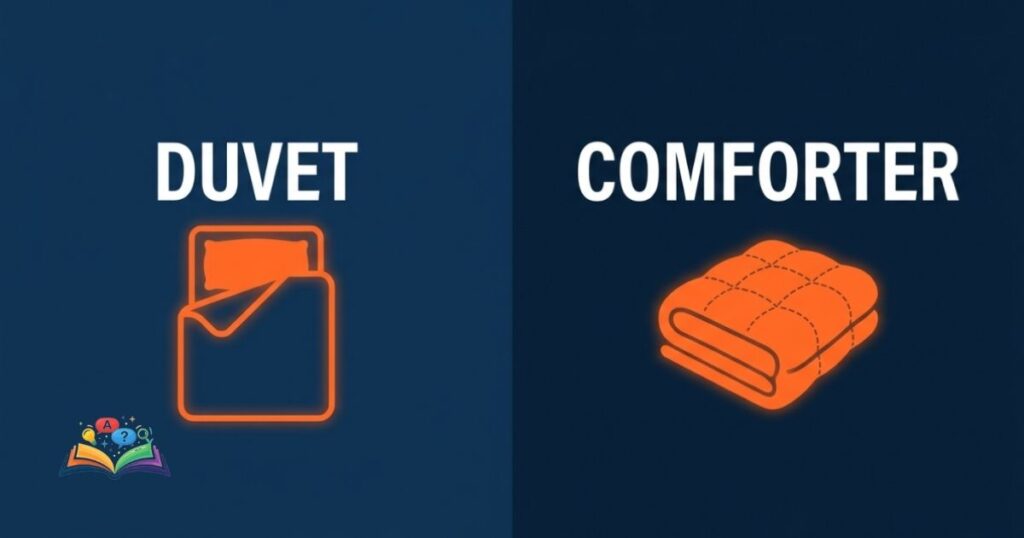
Choosing between a duvet or comforter is a common point of confusion for shoppers upgrading their bedroom setup. The main difference lies in their construction. A duvet requires two pieces, which include an insert and a removable cover. A comforter is a single, quilted blanket ready to use right out of the bag.
People often use the terms interchangeably, but they represent entirely different bedding systems. Buying the wrong one can lead to frustrating nights of sleep, mismatched sheets, or expensive trips to the dry cleaner.
This guide breaks down exactly how each blanket functions, how to wash them, and which option makes the most sense for your climate and budget.
Defining The Core Structure Of A Duvet Or Comforter Setup
The fundamental difference between a duvet or comforter comes down to how they are assembled. A duvet functions like a pillow and a pillowcase, featuring a plain white insert tucked inside a washable, decorative cover. A comforter is a single piece of fabric with insulation sewn directly inside, requiring no extra covers.
Both options offer unique advantages depending on how you prefer to make your bed. Review the specific construction details below to see which system aligns best with your daily routine.
How A Duvet Insert Works With A Removable Cover
A true duvet consists of an insert filled with natural or synthetic insulation. This insert is usually plain white and not designed for standalone use. You must slip it inside a protective shell, called a duvet cover. The cover stays closed with buttons, zippers, or ties.
The primary benefit of this system is cleanliness. You can remove the outer layer and wash it alongside your fitted sheets. If you suffer from allergies, understanding the difference between down and down alternative inserts will help you choose the right core for your duvet setup without worrying about the exterior fabric.
Why A Comforter Functions As A Single Built-In Piece
Comforters are incredibly straightforward. Manufacturers take a decorative top fabric, a layer of insulation, and a bottom fabric, then quilt them together into one unified piece. The stitching patterns keep the filling evenly distributed across the entire blanket.
Because the insulation is locked in place, you do not have to battle with shifting corners. If you are comparing different top layers, knowing the difference between a quilt and a coverlet can help you realize that comforters offer much more loft and fluffiness than standard thin blankets.
Temperature Regulation: Selecting A Duvet Or Comforter For Year-Round Sleep
Your bedroom climate plays a massive role in bedding selection. Comforters are generally sold with a single weight or thickness. If you buy a heavy winter comforter, you will likely sweat through it during July.
Duvets offer much better versatility for year-round temperature swings. You can buy a lightweight insert for summer and a heavy, insulated insert for winter, all while keeping the same exterior cover. Additionally, you can swap out the fabric of the cover itself. Switching from a heavy flannel cover in December to a breathable cotton cover in June makes a huge difference. Recognizing the difference between percale and sateen sheets is crucial here, as percale covers sleep much cooler than sateen covers.
Hotel Bedding Secrets: Do Hotels Use A Duvet Or Comforter?
Almost all major hotel chains across the United States use duvets instead of comforters. The reason is purely sanitary and logistical. Housekeeping staff cannot wash thick, bulky comforters after every single guest checks out. It requires too much water, energy, and drying time.
Instead, hotels use white duvet covers that can be stripped, bleached, and sanitized daily. When identifying what’s the difference between standard home setups and luxury hotel beds, the removable cover is the key factor. The triple-sheeting method used by high-end resorts also relies on the flat, clean edges of a well-pressed duvet cover. If you want a pristine, resort-style bedroom, a white duvet setup is the exact route to take.

Mixing Bedding Types: Can You Upgrade A Duvet Or Comforter With Extra Covers?
Many buyers end up hating the pattern on their comforter after a few years. Instead of throwing the whole blanket away, you can absolutely stuff a comforter inside a duvet cover. The comforter simply acts as an insert.
This hybrid approach works well, but sizing can be tricky. Comforters are cut larger than standard inserts so they drape over the sides of the mattress. Trying to squeeze an oversized comforter into a standard cover causes bunching. Just as you must know the difference between a California king and a standard king to buy the right mattress, you must measure your comforter before buying an outer cover for it.
Analyzing The Downsides When Choosing A Duvet Or Comforter
No bedding system is perfect, and each style comes with its own set of daily annoyances. Read the breakdowns below to understand the most common complaints associated with both options before you spend your money.
Frustrations With Shifting Duvet Inserts Inside Covers
The single biggest complaint about duvets is that the insert moves around. Over the course of a night, the heavy insert can slide down to the bottom of the cover, leaving you with nothing but two thin pieces of fabric near your chin. Most modern inserts include corner loops that tie to the inside of the cover, but these ties frequently break or come undone.
Difficulties Washing Bulky King-Sized Comforters
While comforters do not shift around, washing them is a massive chore. A queen or king-sized comforter will not fit in a standard residential washing machine. Cramming it into a small drum will ruin the insulation and potentially break your appliance. You will inevitably have to take it to a commercial laundromat or pay for dry cleaning. Protecting your bed correctly requires knowing the difference between a mattress pad and a mattress topper, but protecting a comforter usually means buying a flat sheet to act as a barrier between your body and the blanket.
Final Clarity On Buying A Duvet Or Comforter
Your final decision depends entirely on your tolerance for laundry and making the bed. If you value a tailored look and easy washing, buy a duvet. If you hate assembling bedding and want instant warmth, buy a comforter.
Just like comparing crop and animal profitability in a farming game, your bedding choice comes down to daily maintenance versus long-term efficiency.
| Feature | Duvet System | Comforter System |
| Ease of Washing | High (Wash the cover at home) | Low (Requires commercial washers) |
| Setup Time | Slow (Stuffing and tying required) | Fast (Ready immediately) |
| Style Changes | Easy (Buy a new cover) | Hard (Requires buying a new blanket) |
| Overall Profile | Fluffy and rounded | Flatter with tailored edges |
If you plan to upgrade your decorative pillows to match your new blanket, brushing up on the difference between a Euro sham and a standard sham will guarantee your entire bed looks cohesive.
Common Questions About Owning A Duvet Or Comforter
Does a comforter need a cover? No, a comforter is designed to be used without a cover. The exterior fabric is already decorative and finished. However, you can use a cover over it to change its color or protect it from stains.
Which is more expensive, a duvet or a comforter? A duvet system is initially more expensive because you have to purchase the insert and the cover separately. Over time, however, a comforter can become more expensive due to specialized dry cleaning costs.
Can you use a duvet insert by itself? Yes, but it is not recommended. Inserts are typically plain white and lack a durable outer shell. Using one without a cover exposes it to sweat, body oils, and dust, which breaks down the insulation faster.
What is the easiest way to put on a duvet cover? The “California Roll” or “Burrito Method” is the easiest technique. Turn the cover inside out, lay it flat, and place the insert on top. Tie the corners, roll the entire setup into a tight tube, and flip the cover right-side out over the roll.
Do duvets hang off the sides of the bed? Duvet inserts are cut to fit the exact dimensions of the mattress top, so they do not hang down very far. Comforters are intentionally oversized to provide a long drape over the edges of the bed frame.