If you hesitate between peeking or peaking, you are dealing with one of the most common spelling mix-ups in English. These two words sound alike but mean completely different things. Using the wrong one can instantly change the meaning of your sentence.
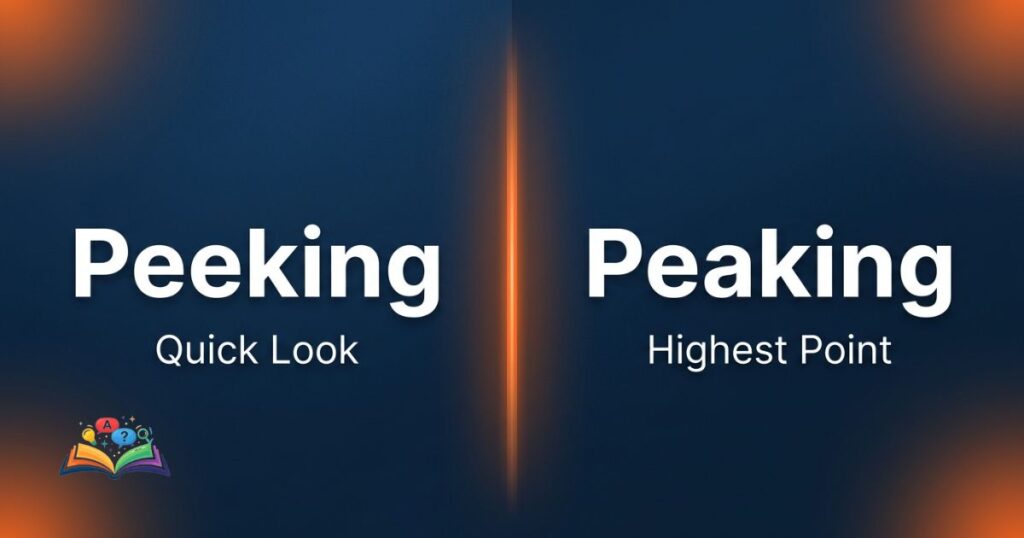
Here is the simple truth: “peeking” relates to looking quickly or secretly, while “peaking” refers to reaching a highest point. This guide breaks down how each word works, when to use them, and how to avoid this mistake in everyday writing. For more patterns like this, see this broader guide on commonly confused words in English.
Why “Peeking” And “Peaking” Get Confused In Everyday Writing
The confusion mostly comes from how similar these words sound. In spoken English, “peek” and “peak” are nearly identical, which makes it easy to mix them up when writing.
Another reason is habit. People often rely on phonetics instead of meaning. This is the same issue seen in other mix-ups like role vs roll usage explained or site vs cite differences explained. Sound alone is not enough, context matters.
You will also notice this pattern in similar spelling traps like loath vs loathe meaning and waisted vs wasted differences, where pronunciation leads people in the wrong direction.
What “Peeking” Actually Implies In Real Contexts
“Peeking” is all about looking briefly, often secretly or casually. It always involves vision or observation.
Situations Where “Peeking” Fits Naturally (Sneaking, Looking Briefly)
Use “peeking” when someone is:
- Looking through a small opening
- Glancing quickly without being obvious
- Trying to see something secretly
Examples:
- She was peeking through the curtains.
- The child kept peeking at his birthday gifts.
- He took a quick peek at his phone during the meeting.
Common Phrases Like “Peeking Out,” “Peeking Through,” And “No Peeking”
Some phrases make this even clearer. These always relate to vision:
- Peeking out: The sun was peeking out from behind the clouds.
- Peeking through: Light was peeking through the window blinds.
- No peeking: A classic instruction during surprises or games
Confusion like this also appears in sound-based word pairs such as peel vs peal explained clearly and flue vs flu differences, where meaning depends on context, not pronunciation.
What “Peaking” Actually Refers To In Usage
“Peaking” is about reaching the highest level, either physically, emotionally, or in performance.
Before looking at specific uses, remember this: if something is rising to its maximum point, “peaking” is the correct choice.
How “Peaking” Connects To Maximum Levels, Performance, Or Timing
“Peaking” often appears in:
- Sports performance
- Business growth
- Emotional intensity
- Data or trends
Examples:
- The athlete is peaking right before the championship.
- Sales are peaking during the holiday season in the US.
- His excitement was peaking before the announcement.
Real Contexts Like “Peaking Interest” And Performance Peaks
Here is where many people slip.
- ❌ “This topic is peaking my interest”
- ✔ Better: “This topic is piquing my interest”
“Peaking interest” is usually incorrect because interest is not reaching a maximum level in that sense. This confusion is similar to errors seen in griefing vs grieving meaning and bingeing vs binging spelling, where small changes shift meaning entirely.
Sentence-Level Breakdown Of “Peeking” Vs “Peaking” In Context
The easiest way to separate these words is to focus on the type of action in the sentence.
| Context Type | Correct Word | Example |
| Visual action | Peeking | She is peeking through the door |
| Sneaky glance | Peeking | Stop peeking at the answers |
| Maximum level | Peaking | Demand is peaking this month |
| Performance timing | Peaking | The team is peaking at the right time |
Quick tip:
If you can replace the word with “looking,” use peeking.
If you can replace it with “reaching the top,” use peaking.
This same context-based thinking helps avoid mistakes like parenthesis vs parentheses usage or roster vs roaster differences.
“Peeking,” “Peaking,” Or “Peeping”: Untangling Related Word Confusions
These three words often overlap in casual conversation, which creates even more confusion. Here is how they differ.
Where “Peeping” Overlaps With “Peeking”
“Peeping” is similar to “peeking,” but it is less common in modern US usage.
- “Peeping” can mean looking secretly
- It can also refer to making a small sound (like birds)
Example:
- The child was peeping through the keyhole
However, in most everyday writing, “peeking” is preferred. Similar usage clarity applies in cases like extravert vs extrovert spelling and unkept vs unkempt differences.
Why “Peaking” Does Not Belong In Visual Or Sneaky Contexts
“Peaking” never relates to looking or seeing. Using it in those cases is incorrect.
- ❌ He was peaking through the window
- ✔ He was peeking through the window
This type of confusion mirrors errors like Mondays vs Monday’s apostrophe rules, where structure and meaning matter more than sound.
Final Clarity On Peeking Or Peaking
To lock this in, keep it simple:
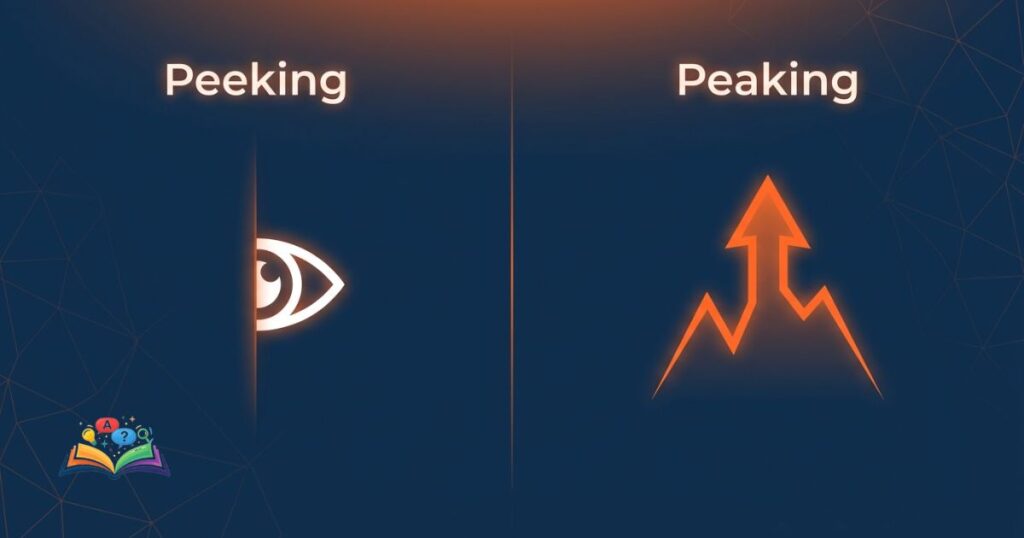
- Peeking = looking quickly or secretly
- Peaking = reaching the highest point
If your sentence involves eyes, use peeking.
If it involves levels, growth, or timing, use peaking.
When in doubt, pause and check the context. That small step prevents the mistake every time.
Common Questions About Peeking Or Peaking
Is It “Peeking” Or “Peaking” Interest?
Neither is ideal. The correct phrase is “piquing interest.” “Peaking interest” is often a misuse.
What Does “Peeking” Mean In Simple Terms?
“Peeking” means taking a quick or secret look at something.
What Does “Peaking” Mean In Performance Contexts?
“Peaking” means reaching the highest level of performance or intensity, often at the best possible time.
Is “Peek” The Same As “Peak” In “Peek-A-Boo”?
No. “Peek-a-boo” uses “peek,” which relates to looking, not reaching a high point.
How Do You Know Which Word Fits Without Memorizing Rules?
Focus on the action. If it involves seeing, use “peeking.” If it involves reaching a top level, use “peaking.”