If you have ever paused before typing “while” or “whilst,” you are not the only person confused by these two words. They mean nearly the same thing, but their tone, regional use, and writing style can feel very different.
The short answer is simple: “while” is the standard choice in modern American English, while “whilst” appears more often in British English and formal writing. This guide explains when each word fits naturally, where they sound awkward, and how to avoid sounding overly formal or outdated.
Why People Compare “While” And “Whilst” So Often
“While” and “whilst” both connect ideas related to time or contrast. Because they share the same meaning in many sentences, writers often wonder if one is more correct than the other.
The confusion becomes stronger when people read British books, academic papers, or older English texts that use “whilst” regularly. The sections below break down how both words work in real-world English.
How “While” And “Whilst” Function In A Sentence
Both words usually act as conjunctions. They connect two related ideas happening at the same time or show contrast between ideas.
Even though their meanings overlap, the tone changes depending on which word you choose. The examples below show where each one sounds natural.
Using “While” To Show Time Or Simultaneous Actions
“While” commonly shows two actions happening together.
Correct examples:
- I listened to music while driving home.
- She answered emails while eating lunch.
- The kids played outside while their parents cooked dinner.
Incorrect example:
- I listened to music whilst driving home in casual American conversation.
The sentence is grammatically correct, but “whilst” sounds overly formal to many US readers.
Using “While” To Show Contrast Or Concession
“While” can also introduce contrast.
Examples:
- While the movie was long, it was still entertaining.
- While he agreed with the plan, he disliked the timing.
This usage appears constantly in modern American English writing.
Why “Whilst” Usually Replaces “While” Without Changing Meaning
In many British contexts, “whilst” simply replaces “while.”
Examples:
- Whilst I understand your opinion, I disagree.
- She read the report whilst waiting for the train.
The meaning stays the same. The difference is mostly tone and regional preference.
For more confusing English usage patterns, see this guide on spelled vs spelt in American and British English.
Starting A Sentence With While Or Whilst
Many writers hesitate to begin a sentence with “while” or “whilst,” but both are grammatically acceptable. The real issue is tone and readability.
The examples below show when each opening sounds natural and when it feels too formal for everyday writing.
When “While” Sounds More Natural At The Beginning Of A Sentence
“While” works smoothly in modern US writing.
Examples:
- While the idea sounds simple, the process takes time.
- While many people use both words interchangeably, Americans strongly prefer “while.”
This style sounds clean and conversational.
When “Whilst” Creates A More Formal Tone In Opening Clauses
“Whilst” creates a more traditional or literary tone.
Examples:
- Whilst the results were impressive, the cost remained high.
- Whilst some British writers prefer the older form, many modern publications avoid it.
In American writing, this wording can sound stiff or overly polished.
While Vs Whilst In Academic Writing
Academic writing sometimes keeps older or formal language patterns longer than casual writing. That is one reason “whilst” still appears in research papers and scholarly publications.
Still, most US academic style guides prefer straightforward wording. The sections below explain why.
Why Universities And Style Guides Usually Prefer “While”
American universities generally favor “while” because it sounds clearer and more modern.
Example:
- While the experiment succeeded, additional testing remained necessary.
This wording feels direct and readable.
If you enjoy grammar comparisons like this one, this article on criteria vs criterion usage rules explains another commonly mixed-up pair.
When “Whilst” Still Appears In Research Papers And Formal Essays
Some British academic writers still use “whilst,” especially in humanities subjects.
Example:
- Whilst the theory remains influential, recent studies challenge its assumptions.
The sentence is correct, but US readers may see it as formal or old-fashioned.
While Or Whilst In British, American, And Australian English
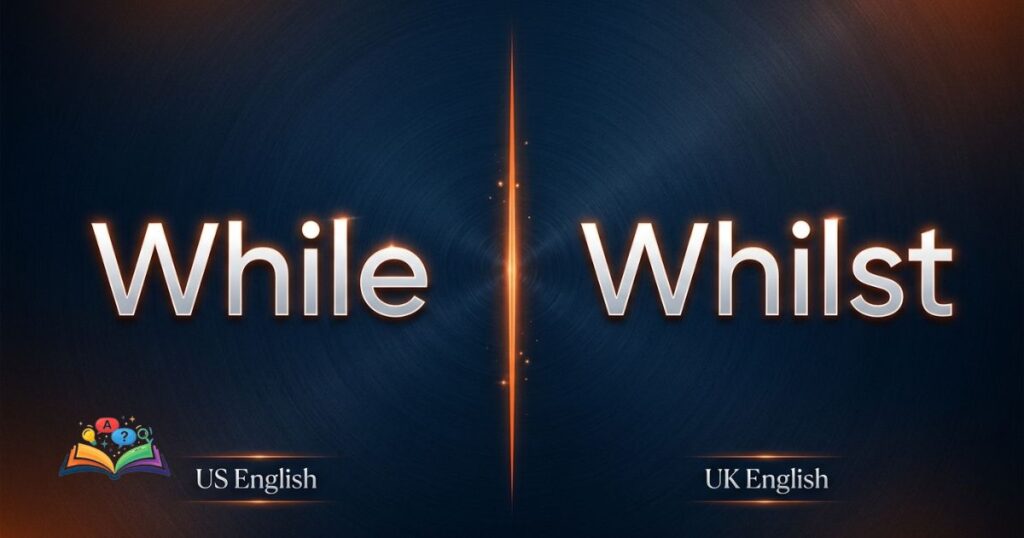
Regional English plays a major role in this debate. What sounds normal in London may sound unusual in Chicago or Dallas.
Understanding regional differences helps you match your writing to your audience.
How UK English Treats “Whilst” As Standard But Formal
In the UK, “whilst” is accepted and widely understood. However, many British writers still prefer “while” in everyday communication.
“Whilst” often appears in:
- Academic writing
- Legal writing
- News commentary
- Formal essays
Why American English Rarely Uses “Whilst”
In the United States, “while” dominates almost every style of writing.
Americans often associate “whilst” with:
- British English
- Older literature
- Formal speech
- Pretentious writing
For that reason, “while” is usually the safer choice for US audiences.
You can see similar US vs UK differences in this comparison of math vs maths in regional English.
How Australian English Balances “While” And “Whilst”
Australian English sits somewhere in the middle. “Whilst” appears more often than it does in the US, but “while” still remains more common overall.
What The Oxford English Dictionary Says About “Whilst”
Historical dictionaries show that “whilst” is an older variation of “while.” Both words have existed for centuries.
Modern English gradually shifted toward shorter and simpler forms, which helped “while” become dominant.
How “Whilst” Developed From Older English Usage
“Whilst” became popular in Middle English as a variation connected to older speech patterns.
It survived longer in British English than in American English.
Why “While” Became The Dominant Modern Form
Modern English usually favors shorter words and cleaner sentence flow.
That shift also explains changes covered in this guide on mom vs mum in US and UK English.
Real Sentence Patterns With While And Whilst
The easiest way to understand the difference is by seeing real sentence structures side by side.
These comparisons make the tone difference much clearer.
Sentence Structures Where “While” Sounds More Natural
| Natural American Usage | Less Natural Alternative |
| While I was cooking, the phone rang. | Whilst I was cooking, the phone rang. |
| She smiled while reading the message. | She smiled whilst reading the message. |
| While the plan worked, it took too long. | Whilst the plan worked, it took too long. |
Sentence Structures Where “Whilst” Fits Formal Writing Better
| Formal Style Example | Tone |
| Whilst the agreement was signed, negotiations continued. | Formal |
| Whilst acknowledging the criticism, the company defended its actions. | Academic |
| Whilst the proposal appears simple, implementation remains difficult. | Professional |
Common Grammar Problems With While And Whilst
Many writers struggle with punctuation, sentence flow, and overuse when using these words.
The points below cover the mistakes people make most often.
Do You Need A Comma Before “Whilst”?
Sometimes.
Use a comma when the clause creates a pause or contrast.
Example:
- The project succeeded, whilst several problems remained unresolved.
Do not force commas into short, simple sentences.
Example:
- She listened whilst driving.
For more grammar confusion involving sentence structure, check this guide on masters or master’s rules.
Why Some Writers Overuse “Whilst” In Everyday Writing
Some people use “whilst” because it sounds smarter or more formal. In reality, overusing it can make writing sound unnatural.
In most US writing situations:
- “While” sounds smoother.
- “While” feels more modern.
- “While” improves readability.
Confusing “While Away” With “Wile Away”
These phrases are different.
Correct phrase:
- We wiled away the afternoon playing cards.
Incorrect phrase:
- We whiled away the afternoon.
The verb is actually “wile,” not “while.”
Words People Commonly Compare Alongside While And Whilst
People who search for “while vs whilst” often compare other confusing English word pairs too.
Many of these differences come from regional spelling, grammar history, or changing usage patterns.
Why “Who Or Whom” Creates Similar Grammar Confusion
“Who” and “whom” confuse people because modern speech often ignores older grammar distinctions.
The same thing happens with “whilst.” Grammar rules may allow it, but modern usage trends matter more.
Alternatives People Use Instead Of “Whilst”
Depending on the sentence, alternatives include:
- While
- Although
- Whereas
- During
- At the same time
For more grammar comparisons, this article on will vs would usage differences explains another commonly misunderstood pair.
You may also enjoy this breakdown of dove vs dived in American English and this guide on disorganized vs unorganized usage.
Whilst Pronunciation And Spoken English Usage
Most Americans rarely hear “whilst” in daily conversation. It appears far more often in writing than in speech.
Pronunciation differences also contribute to why the word feels distinctly British to US audiences.
How British Speakers Pronounce “Whilst”
“Whilst” is usually pronounced:
WHILST
The “st” sound is clearly spoken at the end.
Why “Whilst” Is Rare In Casual American Speech
American English generally prefers shorter, faster speech patterns.
That preference explains why Americans usually say:
- while
- toward
- among
instead of older forms like:
- whilst
- towards
- amongst
A similar pattern appears in past-tense debates like shrank vs shrunk usage.
Final Clarity On While Or Whilst
“While” is the standard choice in modern American English. It sounds natural in casual writing, business communication, journalism, and academic work.
“Whilst” is still correct, especially in British English, but it often sounds formal or old-fashioned to US readers. If your audience is American, “while” is usually the better option for clarity and readability.
For broader grammar help and writing comparisons, visit this collection of correct word usage guides.
Common Questions About While Or Whilst
Why Do People Say “Whilst” Instead Of “While”?
Many British speakers use “whilst” because it remains accepted in UK English and formal writing traditions.
When Should I Use While Vs Whilst?
Use “while” in most modern American writing. Use “whilst” mainly for British or formal stylistic contexts.
Is “Whilst” Outdated Or Old-Fashioned?
Not completely, but many Americans view it as formal or slightly old-fashioned.
Do Americans Say “While” Or “Whilst”?
Americans overwhelmingly prefer “while.”
Is It Okay To Use “Whilst” In Formal Writing?
Yes, especially in British English or formal academic contexts.
Should You Start A Sentence With “Whilst”?
Yes. It is grammatically correct, though “while” usually sounds more natural in US English.
Does “Whilst” Need A Comma?
Only when normal comma rules apply for pauses, contrasts, or introductory clauses.
What Can You Use Instead Of “Whilst”?
Common alternatives include “while,” “although,” “whereas,” and “during.”
Is It “While I Am Away” Or “Whilst I Am Away”?
Both are correct, but “while I am away” sounds more natural in American English.
Which Form Sounds Better In Modern English?
For most readers, especially in the US, “while” sounds cleaner, simpler, and more modern.