If you are unsure whether to use bolder or boulder, the difference is simple but easy to mix up. “Bolder” relates to confidence or bravery, while “boulder” refers to a large rock. One describes personality, the other describes an object.
This confusion happens because both words sound nearly identical. In this guide, you will see how each word works, how to use them correctly in sentences, and how to avoid common mix-ups in everyday writing.
Bolder Or Boulder: Quick Answer For Immediate Clarity
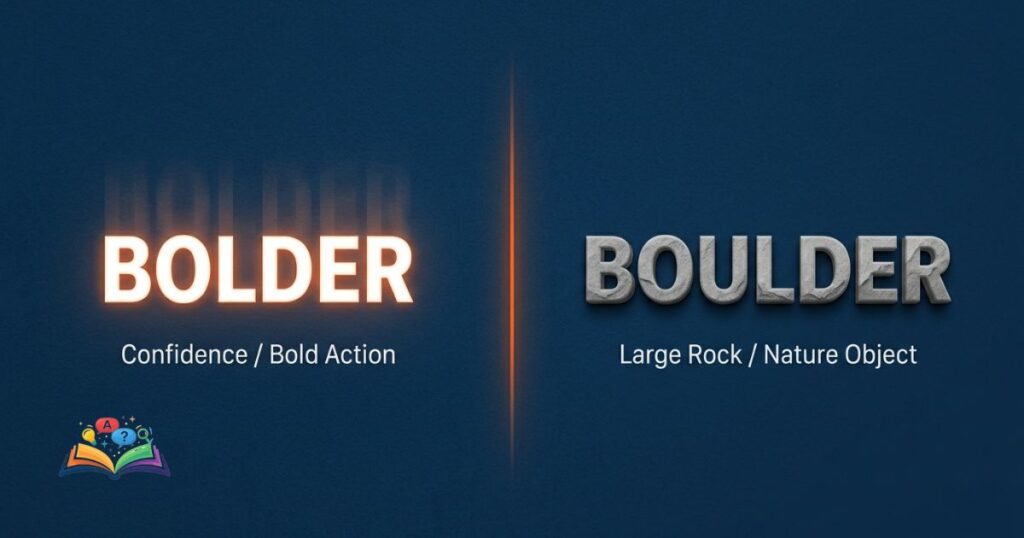
“Bolder” is the comparative form of bold, meaning more confident or daring. “Boulder” is a noun that refers to a large rock. If you are describing a person’s attitude, use bolder. If you are talking about a rock, use boulder.
Why “Bolder” And “Boulder” Are Commonly Confused In Writing
These two words sound the same, which makes them classic homophones in English. Even experienced writers pause for a second when choosing between them.
If you want to avoid mistakes, look at how the confusion happens and where it shows up most often.
How Homophones Like Bolder And Boulder Create Misinterpretation
Homophones are words that sound alike but have different meanings and spellings. Similar confusion appears in other word pairs like role vs roll usage differences or stationary vs stationery spelling rules.
Because pronunciation is nearly identical, context becomes the only clue.
- “She became bolder over time.”
- “He climbed a boulder during the hike.”
One letter changes everything.
Real-Life Contexts Where The Confusion Happens Most
You will often see this mix-up in:
- Social media captions
- School essays
- Informal emails
- Fitness or outdoor blogs
Writers may type “boulder” when describing personality, which creates a strange image. Similar confusion also happens in pairs like peel vs peal meaning differences and waisted vs wasted usage.
What “Bolder” Means In Modern English Usage
“Bolder” comes from the adjective bold, which means confident, daring, or fearless. It is used when comparing two levels of confidence.
For example:
- “Her speech became bolder with each attempt.”
- “He made a bolder decision this year.”
In American English, “bolder” is preferred over “more bold” in most situations because it is shorter and more natural.
This type of comparison is common in English grammar, similar to how forms change in words explained in extravert vs extrovert spelling debate or bingeing vs binging spelling variations.
What “Boulder” Refers To In Physical And Figurative Contexts
A boulder is a large rock, typically rounded by natural forces like water or wind. It is commonly used in geology, hiking, and outdoor descriptions.
Examples:
- “A massive boulder blocked the trail.”
- “They sat on a boulder near the river.”
In informal language, “boulder” can sometimes be used metaphorically to represent something heavy or difficult, but the literal meaning is far more common.
You might also hear it in place names or events, especially in the United States.
Bolder Vs Boulder In Sentences: Context-Based Usage Breakdown
Understanding context is the fastest way to get this right. One word fits emotional or personality traits, the other fits physical objects.
Check the examples below to lock in the difference.
Using “Bolder” In A Sentence With Correct Tone
Use “bolder” when describing behavior, attitude, or decisions.
- Correct: “She took a bolder approach to the project.”
- Incorrect: “She took a boulder approach to the project.”
- Correct: “He became bolder after gaining experience.”
- Incorrect: “He became boulder after gaining experience.”
Using “Boulder” In A Sentence When Referring To Rocks
Use “boulder” when talking about something physical and rock-related.
- Correct: “The hikers climbed over a large boulder.”
- Incorrect: “The hikers climbed over a large bolder.”
- Correct: “A boulder rolled down the hill.”
- Incorrect: “A bolder rolled down the hill.”
This type of clarity also matters in other confusing pairs like loath vs loathe meaning and usage or griefing vs grieving differences.
“Bolder Boulder” And Other Notable Uses Of The Word Boulder
The term “BOLDERBoulder” refers to a famous 10K race held annually in Boulder, Colorado. It attracts thousands of participants and is one of the most recognized running events in the United States.
Beyond that, “boulder” appears in:
- City names like Boulder, Colorado
- Outdoor sports like bouldering
- Travel and hiking guides
These references always relate back to the rock-based meaning, not personality traits.
Common Mistakes When Using Bolder Or Boulder In Writing
Mistakes usually happen when writers rely on sound instead of meaning. The result is a sentence that feels off, even if it looks correct at first glance.
Here are the most frequent errors:
- Using “boulder” to describe confidence
- Using “bolder” when referring to nature or rocks
- Ignoring context clues in the sentence
For example:
- Incorrect: “She made a boulder move in her career.”
- Correct: “She made a bolder move in her career.”
This kind of confusion is similar to errors covered in site vs cite differences in writing and peeking vs peaking meaning confusion.
Final Clarity On Bolder Or Boulder For Confident Usage
The rule is simple and reliable:
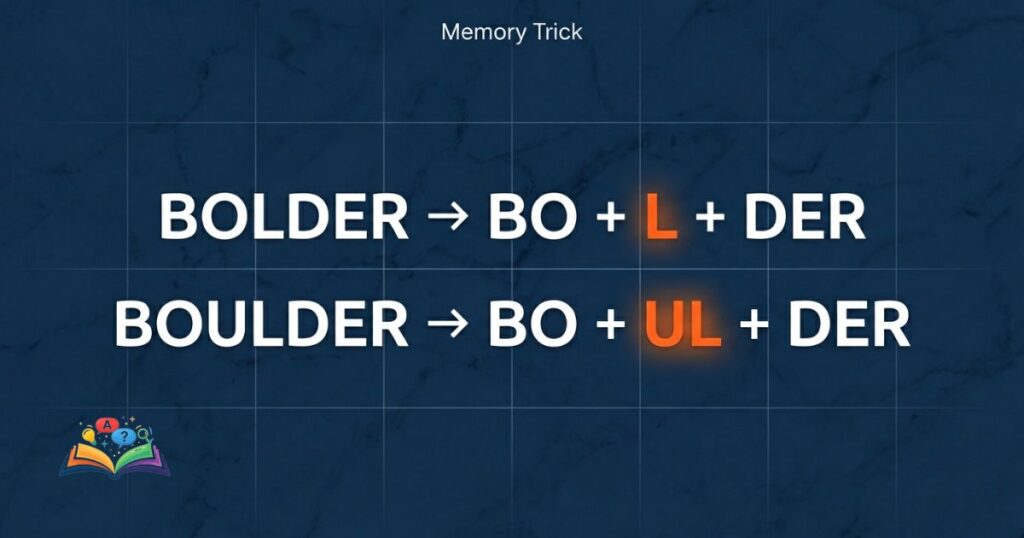
- Bolder = more bold, more confident
- Boulder = a large rock
If the sentence is about personality, choice, or attitude, go with bolder. If it involves something physical you can touch, it is boulder.
For a broader look at similar word mix-ups, check this guide to commonly confused words in English, which covers patterns behind these mistakes.
Common Questions About Bolder Or Boulder
Is It Bolder Or Boulder?
It depends on context. “Bolder” relates to confidence, while “boulder” refers to a large rock.
How Do You Spell Boulder Like A Rock?
The correct spelling is b-o-u-l-d-e-r. It always refers to a large stone or rock formation.
What Does “Bolder” Mean In Writing?
“Bolder” means more confident, daring, or assertive. It is the comparative form of “bold.”
What Does A Boulder Look Like?
A boulder is a large, solid rock, often rounded and found in natural landscapes like mountains, rivers, or trails.
Do We Say More Bold Or Bolder?
Both are technically correct, but “bolder” is more common and natural in everyday American English.
Can Introverts Be Bolder?
Yes. Being introverted does not prevent someone from becoming more confident or taking bold actions.
What Is The BOLDERBoulder Event And Why It’s Famous?
It is a well-known 10K race held in Boulder, Colorado, attracting large crowds and professional runners each year.