
If you have ever paused while writing “dove” or “dived,” you are not the only English speaker confused by this verb. Both words are accepted as the past tense of “dive,” but the preferred choice changes depending on the region and style guide.
In American English, “dove” is far more common in casual and professional writing. In British English, “dived” remains the standard form. This guide explains which version fits US English, what the Oxford Dictionary says, how grammar experts treat both forms, and when each one sounds natural.
For more word confusion guides, check this collection of correct word usage rules.
Dove Or Dived: Which Form Is Grammatically Correct?
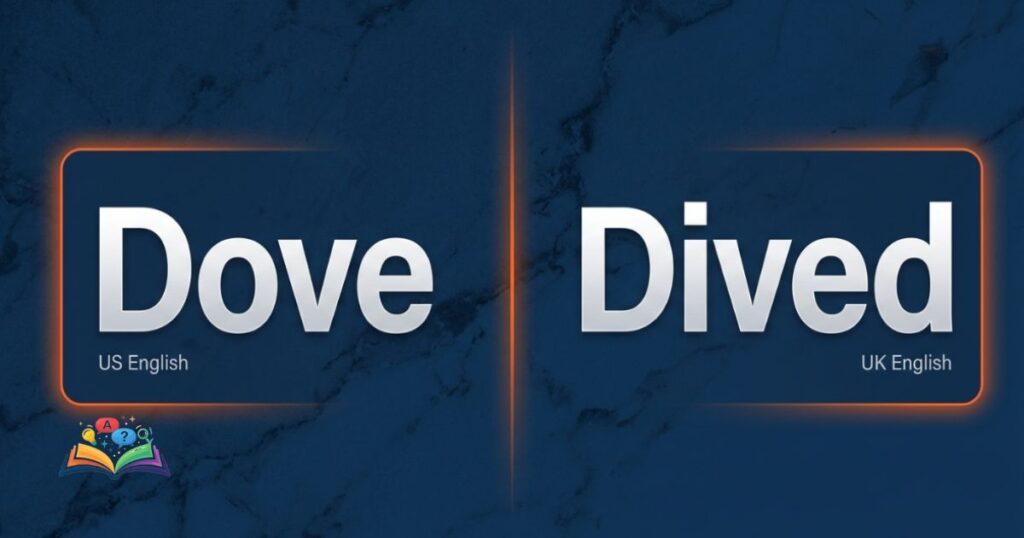
“Dove” and “dived” are both grammatically correct as the past tense of “dive.” In the United States, “dove” is the preferred form in modern English. In the UK and Australia, “dived” is still more common in formal writing and speech.
| Word | Usage Region | Grammar Status |
| Dove | Mainly American English | Correct |
| Dived | British and International English | Correct |
American English often changes irregular verbs over time. That is why many US speakers naturally say “dove,” just like “drive” becomes “drove.”
Compare these examples:
- Correct US English: “He dove into the pool.”
- Correct UK English: “He dived into the pool.”
- Incorrect: “He dive into the pool.”
If you enjoy comparing regional English usage, you may also like this guide on math or maths in American and British English.
Why Americans Prefer Dove While British English Favors Dived
The split between “dove” and “dived” mostly comes down to language patterns and regional habits. American English tends to accept irregular verb forms more quickly, while British English usually keeps older standard forms longer.
The sections below explain why the two versions developed differently and why both still exist today.
How American English Popularized Dove
In the United States, “dove” became popular during the 19th and 20th centuries. Americans treated “dive” similarly to verbs like:
- Drive → Drove
- Ride → Rode
- Write → Wrote
Because of this pattern, “dove” sounded natural to many speakers.
Examples in US English:
- “The quarterback dove for the ball.”
- “She dove into the ocean during summer vacation.”
Today, most American newspapers, schools, and style guides accept “dove” without issue.
Why Dived Remains Standard In UK And Australian English
British English usually keeps regular verb endings. Since “dive” originally followed the standard “-ed” pattern, “dived” stayed common in the UK and Australia.
Examples:
- “The athlete dived from the platform.”
- “He dived into the water after the rescue boat arrived.”
This difference is similar to other regional spelling and grammar variations, such as spelled or spelt in English usage.
What Oxford Dictionary Says About Dove Or Dived
Major dictionaries recognize both forms today. Still, they often note regional preference.
The Oxford English Dictionary and other modern references list “dove” as mainly North American English and “dived” as the traditional form used internationally. The details below explain how dictionaries classify each version.
Dove Or Dived In Oxford English Dictionary Entries
Oxford lists:
- Dove: chiefly North American past tense of dive
- Dived: standard past tense and past participle of dive
That means American readers will usually expect “dove,” while international audiences may expect “dived.”
Is Dove Accepted In Formal British English Writing?
“Dove” is understood in the UK, but it may sound informal or Americanized in formal British writing.
For example:
- Formal UK style: “The swimmer dived gracefully.”
- Informal US style: “The swimmer dove gracefully.”
If your audience is American, “dove” usually sounds more natural.
When To Use Dove Instead Of Dived In Real Sentences
Choosing between “dove” and “dived” becomes easier when you match the word to your audience and tone. In the US, “dove” fits everyday writing, journalism, and speech.
The examples below show where “dove” sounds natural and where “dived” still works better.
Casual American English Sentences With Dove
These examples match common US usage:
- “He dove into the lake without hesitation.”
- “The dog dove under the fence.”
- “She dove straight into her homework.”
In American conversation, “dived” can sound stiff or overly formal.
Formal And Academic Sentences Using Dived
“Dived” still appears in international publications and academic contexts.
Examples:
- “The researchers dived beneath the reef for samples.”
- “The athlete dived from a ten-meter platform.”
Regional verb preferences also appear in guides like mom or mum in US and UK English.
Dive Past Tense And Past Participle Rules Explained
The confusion around “dove” and “dived” becomes even more noticeable when past participles enter the sentence. Many people use the past tense correctly but hesitate with phrases like “have dived” or “have dove.”
The next sections break down the grammar clearly.
Why “I Have Dived” Sounds More Natural Than “I Have Dove”
In standard grammar, “dived” works better as the past participle.
Examples:
- Correct: “I have dived before.”
- Less common: “I have dove before.”
Even many Americans who say “dove” in the simple past still prefer “have dived” in perfect tense constructions.
Past Tense Vs Past Participle Forms Of Dive
| Verb Form | Example |
| Base Verb | Dive |
| Past Tense | Dove / Dived |
| Past Participle | Dived |
Examples:
- Past tense: “She dove into the river.”
- Past participle: “She has dived there many times.”
This pattern is similar to confusing verb forms like shrank or shrunk in English grammar.
Is Dived A Real Word Or An Outdated Form?
Some Americans assume “dived” is outdated because “dove” dominates US speech. However, “dived” remains fully correct and widely used around the world.
The sections below explain why the word still matters in modern English.
Why Some Speakers Think Dived Sounds Incorrect
Many US speakers rarely hear “dived” outside classrooms or international media. Because of that, it can sound unusual even though it is grammatically correct.
For example:
- Natural in the US: “He dove into the crowd.”
- Less common in the US: “He dived into the crowd.”
How Grammar Guides Defend The Use Of Dived
Style guides still support “dived” because it follows the regular verb pattern.
Other English words show similar regional shifts, including while or whilst usage differences.
Dove Vs Dived In Spoken English Pronunciation
Pronunciation also affects why many Americans prefer “dove.” It sounds smoother and matches familiar irregular verb patterns.
Still, pronunciation can create confusion because “dove” is also the name of a bird.
How Americans Pronounce Dove As The Past Tense Of Dive
In this context, “dove” rhymes with “love.”
Example:
- “He dove into the water.”
Pronunciation: /dʌv/
Why Dove Can Be Confused With The Bird “Dove”
The bird “dove” uses a different vowel sound.
/doʊv/
Examples:
- Bird: “A white dove landed nearby.”
- Verb: “She dove into the pool.”
Context usually makes the meaning obvious.
Common Grammar Situations Where Writers Confuse Dove Or Dived
Many writers know both forms are correct but still struggle when building complete sentences. Confusion usually appears in sports writing, travel stories, or sentences with “into.”
The following examples show the most common trouble spots.
“Scuba Dove Or Dived” In Travel And Sports Writing
Correct usage depends on the audience.
US English:
- “They dove near the coral reef.”
UK English:
- “They dived near the coral reef.”
Mistakes With “Into” Phrases Like Dove Into Or Dived Into
Both versions work before “into.”
Examples:
- “She dove into the discussion.”
- “He dived into the freezing lake.”
Avoid mixing tenses incorrectly:
- Incorrect: “She has dove into the lake.”
- Better: “She has dived into the lake.”
Grammar confusion like this also appears in topics such as criteria or criterion usage rules.
Regional Usage Of Dove Or Dived Across English-Speaking Countries
English changes depending on location, and “dove” versus “dived” is a perfect example. American English strongly prefers one form, while other countries still favor the older version.
The breakdown below shows how usage changes by region.
Dove Or Dived In American English
Most Americans say and write “dove.”
Common examples:
- “He dove off the boat.”
- “The player dove for the touchdown.”
US media, sports commentators, and newspapers heavily favor this form.
Dove Or Dived In British And Australian English
British and Australian English still prefer “dived.”
Examples:
- “She dived beneath the waves.”
- “The goalkeeper dived to stop the ball.”
Regional differences also affect terms like will or would in English grammar.

Why Language Experts Accept Both Dove And Dived Today
Modern English changes constantly, and grammar experts recognize actual usage patterns instead of forcing one global standard. That is why both “dove” and “dived” remain accepted today.
The sections below explain how this language shift happened.
Historical Development Of Dive As An Irregular Verb
Originally, “dived” was the only accepted past tense form. Over time, Americans created “dove” by analogy with other irregular verbs.
This type of change is common in English history.
Why Usage Depends More On Region Than Grammar Accuracy
Today, the “correct” choice depends more on audience expectations than grammar rules.
Quick guideline:
- Writing for Americans: Use “dove”
- Writing for international or British readers: Use “dived”
You can see similar regional preferences in punctuation topics like masters or master’s apostrophe rules and vocabulary comparisons such as disorganized or unorganized.
Final Clarity On Dove Or Dived
“Dove” and “dived” are both correct past tense forms of “dive.” In American English, “dove” is the preferred and more natural choice. In British and Australian English, “dived” remains the standard form.
If your audience is in the United States, “dove” will usually sound smoother and more familiar. For international audiences or formal British writing, “dived” may fit better. The key is consistency and regional awareness.
Common Questions About Dove Or Dived
Why Do Americans Say Dove Instead Of Dived?
Americans adopted “dove” because it matched irregular verb patterns like “drive” and “drove.” Over time, it became the dominant US form.
Is It Dived Or Dove In The UK?
In the UK, “dived” is still the more common and accepted form in formal English.
Is Dived Correct Grammar?
Yes. “Dived” is fully correct and remains standard in British English and many international contexts.
Is Dove Or Dived Correct Usage?
Both are correct. “Dove” is mainly American English, while “dived” is more common outside the United States.
What Is The Past Participle Of Dive?
The standard past participle is “dived,” as in “She has dived professionally for years.”
When Should You Use Dove Instead Of Dived?
Use “dove” when writing for an American audience or using casual US English.