If you are unsure whether “shrank” or “shrunk” is correct, the short answer is that both words are correct, but they are used differently in English grammar. That confusion happens because “shrink” is an irregular verb, and irregular verbs do not follow simple past tense rules.
Many people write phrases like “has shrank” or “I shrunk” without realizing that one form works as a past tense while the other usually works as a past participle. This guide explains the grammar behind shrank vs shrunk, how native English speakers use both forms, and which version sounds natural in modern American English.
If you often mix up tricky verb forms, this guide on correct word usage in English grammar can also help clarify similar language mistakes.
How The Verb “Shrink” Changes Across Tenses
“Shrink” changes form depending on the tense. That is why people get confused between shrank and shrunk. In modern American English, each form has a specific grammatical role.
Check the breakdown below before moving into sentence-level usage.
| Verb Form | Usage | Example |
| Shrink | Base Form | My sweater may shrink in hot water. |
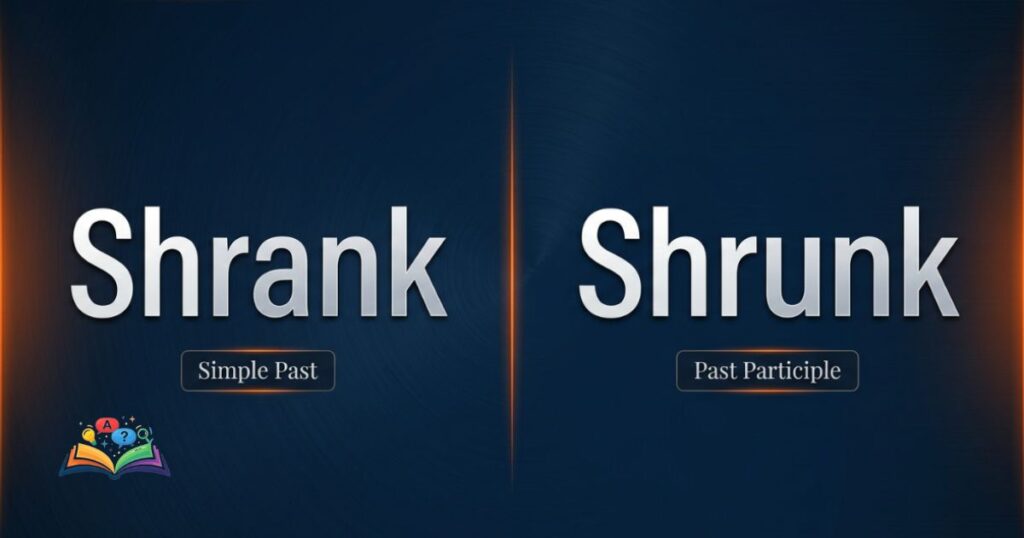
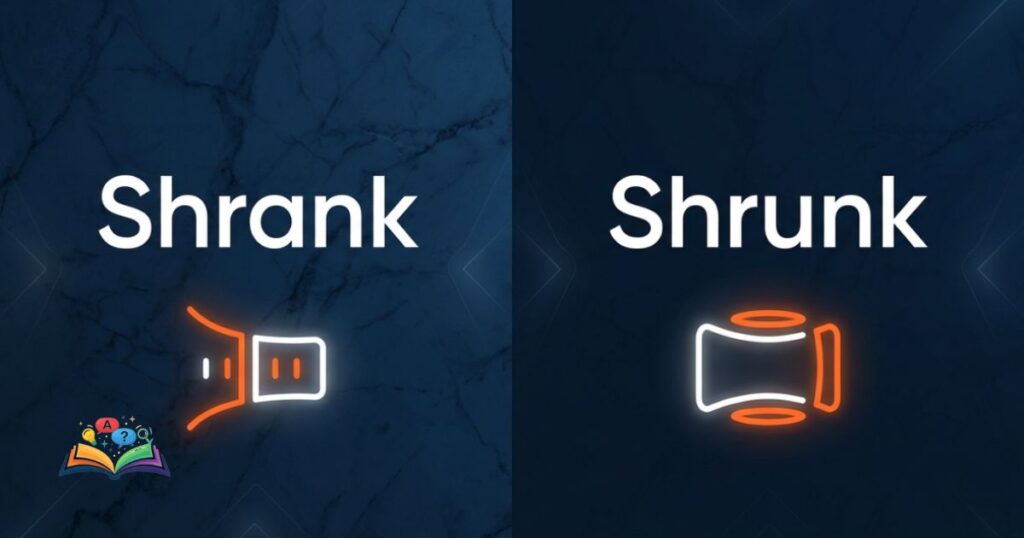
| Shrank | Simple Past Tense | The shirt shrank after one wash. |
| Shrunk | Past Participle | The shirt has shrunk a lot. |
English has many verbs that change this way. If you have seen similar confusion with verbs like “dove” and “dived,” this comparison of dove or dived in American English follows the same pattern.
Why People Confuse Shrank And Shrunk So Often
Shrank and shrunk sound similar, and both refer to something becoming smaller. That overlap causes people to swap the forms without noticing the grammar difference.
The sections below explain why the confusion keeps showing up in everyday speech and writing.
How Everyday Speech Blurs Past Tense And Past Participle Forms
In casual conversation, many Americans use “shrunk” as both the past tense and past participle:
- Informal: “My jeans shrunk.”
- Standard grammar: “My jeans shrank.”
Because people hear both versions regularly, the distinction becomes less obvious over time.
Why Informal English Makes “Shrunk” Sound Correct Everywhere
Movies, TV shows, and casual online writing often favor speech patterns over strict grammar rules. That exposure makes “shrunk” feel natural even when “shrank” is technically correct.
The same thing happens with other US vs UK language differences, including spelled or spelt in English usage.
When To Use “Shrank” In A Sentence
“Shrank” works as the simple past tense of “shrink.” Use it when talking about something that became smaller at a specific time in the past.
The examples below show where “shrank” fits naturally in standard American grammar.
“Shrank” In Simple Past Tense Statements
Correct examples:
- My sweater shrank in the dryer.
- The company shrank during the recession.
- His confidence shrank after the criticism.
Incorrect examples:
- My sweater has shrank.
- The company had shrank quickly.
Common Sentence Patterns That Require “Shrank”
Use “shrank” after:
- I
- You
- We
- They
- A singular noun
Examples:
- They shrank the image before printing it.
- The lake shrank during the drought.
When To Use “Shrunk” In A Sentence
“Shrunk” is usually the past participle form. It commonly appears with helping verbs like “has,” “have,” or “had.”
The examples below make the grammar pattern much easier to spot.
Why “Shrunk” Usually Follows Helping Verbs
Correct examples:
- The shirt has shrunk.
- My savings have shrunk this year.
- The couch had shrunk in storage.
Incorrect examples:
- The shirt shrunk yesterday.
- My savings shrunk last month.
In formal American English, those sentences should use “shrank.”
Sentence Structures Where “Shrunk” Sounds Natural And Correct
“Shrunk” often appears in perfect tenses:
| Tense | Example |
| Present Perfect | The fabric has shrunk. |
| Past Perfect | The material had shrunk already. |
| Future Perfect | The wool will have shrunk by then. |
“Has Shrank” Or “Has Shrunk” — Which Form Fits Standard Grammar?
This is one of the biggest grammar questions tied to shrank vs shrunk. Many people say “has shrank” because it sounds natural in conversation, but grammar guides usually prefer a different form.
The next sections explain which version fits standard English rules.
Why “Has Shrunk” Is Preferred In Modern English
“Has shrunk” is considered grammatically correct because “shrunk” is the past participle.
Correct:
- The sweater has shrunk.
- The market has shrunk significantly.
Incorrect in formal writing:
- The sweater has shrank.
Why “Has Shrank” Still Appears In Casual Speech
Some regional dialects blur the line between past tense and past participle forms. That is why “has shrank” still appears online and in conversation.
The same type of grammar shift appears in comparisons like while or whilst in modern English, where common usage influences perception.
“Have Shrank” Or “Have Shrunk” In American And British English
American and British English sometimes differ in verb preferences, but “have shrunk” remains the standard form in both versions of English.
The details below explain where minor differences still appear.
How US English Treats “Shrunk” As The Standard Past Participle
In American English:
- “They have shrunk the business” is standard.
- “They have shrank the business” sounds nonstandard.
Most grammar style guides in the US follow this rule consistently.
Whether UK English Accepts “Shrank” After “Have”
Some informal British speech may use “have shrank,” but major dictionaries and grammar references still favor “have shrunk.”
You can see a similar US vs UK language split in comparisons like math or maths in English.
“I Shrank” Or “I Shrunk” — Which One Sounds Natural?
People often pause when writing first-person sentences because both versions sound familiar. The correct choice depends on the grammar structure around the verb.
The examples below show the difference clearly.
Situations Where “I Shrank” Is Grammatically Correct
Use “I shrank” for simple past tense:
- I shrank the file size yesterday.
- I shrank my hoodie by accident.
Situations Where “I Shrunk” Refers To A Completed Condition
“I shrunk” appears more often in informal speech than formal grammar. In strict grammar, it usually needs a helping verb:
- I have shrunk the image.
- I had shrunk the document already.
“They Shrank” Or “They Shrunk” In Real-Life Usage
Native speakers use both phrases, especially in casual speech. Still, formal grammar follows a more consistent pattern.
The examples below help separate conversational English from standard written English.
Why Native Speakers Use Both Forms In Conversation
People naturally simplify irregular verbs over time. That is why you may hear:
- “They shrunk the logo.”
- “They shrank the logo.”
Both sound familiar in conversation, but only one is preferred in edited writing.
Which Form Grammar Guides Recommend In Formal Writing
Most American grammar references recommend:
- “They shrank the logo yesterday.”
- “They have shrunk the logo already.”
If you enjoy grammar comparisons like this, the guide on will or would in English grammar covers another commonly confused pair.
Why “Honey, I Shrunk The Kids” Sounds Correct
The movie title “Honey, I Shrunk the Kids” confuses many English learners because it uses “shrunk” where people expect “shrank.”
There is a reason the title still sounds natural to native speakers.
How The Movie Title Uses “Shrunk” Grammatically
The phrase uses conversational American English rather than strict formal grammar. That casual tone fits the movie’s style and makes the title memorable.
Why The Phrase Confuses English Learners
English learners often assume movie titles always follow textbook grammar rules. In reality, pop culture frequently bends grammar for rhythm, tone, or familiarity.
Is “Shrunk” A Real Word In Modern English?
Yes, “shrunk” is absolutely a real word. It functions as the past participle of “shrink” and can also act as an adjective.
The sections below explain both uses.
How Dictionaries Classify “Shrunk”
Major dictionaries classify “shrunk” as:
- Past participle of “shrink”
- Adjective in some contexts
Examples:
- The sweater has shrunk.
- He wore a shrunk cotton shirt.
Why “Shrunk” Also Works As An Adjective
Sometimes “shrunk” describes a condition instead of an action:
- A shrunk sweater
- A shrunk image
- A shrunk file
This is similar to adjective variations discussed in disorganized or unorganized usage.
“Shrank Away” Or “Shrunk Away” — Which Phrase Sounds More Natural?
Both phrases exist, but “shrank away” is generally preferred in standard writing. “Shrunk away” appears more often in conversational speech.
The examples below show how the expressions differ in tone and usage.
Why “Shrank Away” Is More Common In Narrative Writing
Writers usually prefer:
- She shrank away from the spotlight.
- He shrank away in fear.
This follows the standard simple past tense rule.
Cases Where “Shrunk Away” Still Appears In Speech
In casual conversation, people sometimes say:
- He shrunk away from the argument.
Even though it sounds natural, many editors would still replace it with “shrank.”
Common Grammar Errors With Shrank And Shrunk
The biggest mistakes happen when writers mix past tense forms with past participles. Once you know the pattern, those errors become easier to catch.
The examples below show the most common problems.
Using “Shrunk” Without A Helping Verb
Incorrect:
- The jacket shrunk in the wash.
Correct:
- The jacket shrank in the wash.
Mixing Up Past Tense And Past Participle Forms
Incorrect:
- The shirt has shrank.
Correct:
- The shirt has shrunk.
Grammar confusion like this also appears in noun form debates such as criteria or criterion in English grammar.
Sentence Comparisons That Make Shrank Vs Shrunk Easy To Remember
Sometimes the fastest way to remember grammar is through side-by-side comparisons. These examples show exactly where each form belongs.
Use this section as a quick reference whenever you get stuck.
Incorrect Sentences And Their Correct Forms
| Incorrect | Correct |
| My sweater shrunk yesterday. | My sweater shrank yesterday. |
| The company has shrank. | The company has shrunk. |
| They shrunk the image. | They shrank the image. |
Memory Tricks For Choosing The Right Verb Form Quickly
A simple trick:
- Past tense alone = shrank
- After has/have/had = shrunk
Think of it this way:
- Yesterday it shrank.
- Since then it has shrunk.
Similar Irregular Verbs That Follow The Same Pattern As Shrink
“Shrink” is not the only irregular verb that changes form this way. Several English verbs follow a similar structure.
Looking at comparable verbs makes the pattern easier to remember.
Drink, Drank, Drunk And Other Comparable Verb Changes
| Base Verb | Past Tense | Past Participle |
| Drink | Drank | Drunk |
| Sink | Sank | Sunk |
| Ring | Rang | Rung |
| Shrink | Shrank | Shrunk |
This pattern is one reason irregular verbs confuse many writers.
Why Irregular Verbs Cause Confusion In English Grammar
English evolved from multiple language systems, so irregular verbs often keep older forms instead of following modern rules.
You can see similar confusion in punctuation and word form discussions like master’s or masters apostrophe rules and mom or mum in American vs British English.
Final Clarity On Shrank Or Shrunk
“Shrank” and “shrunk” are both correct, but they are not interchangeable in formal grammar. “Shrank” works as the simple past tense, while “shrunk” usually works as the past participle.
The easiest way to remember the difference is this:
- Yesterday it shrank.
- Over time it has shrunk.
That small grammar shift clears up most sentence mistakes immediately.
Common Questions About Shrank Or Shrunk
Is It Shrunk Or Shrank?
Both are correct. “Shrank” is the simple past tense, while “shrunk” is usually the past participle.
Is Shrunk Considered Grammatically Correct?
Yes. “Shrunk” is grammatically correct when used as a past participle or adjective.
What Is Meant By Shrunk?
“Shrunk” means something became smaller in size, amount, or importance.
Is Shrunk A Real Word?
Yes. “Shrunk” is a standard English word recognized by major dictionaries.
When Should You Use Shrank Instead Of Shrunk?
Use “shrank” when writing a simple past tense sentence without helping verbs.
Why Do Some People Say “Has Shrank”?
People often mix past tense and past participle forms in casual speech, even though “has shrunk” is preferred in standard grammar.
Is “Shrink” A British Word?
No. “Shrink” is used in both American and British English.
What Is Another Word For Shrunk?
Depending on context, alternatives include reduced, decreased, contracted, compressed, or minimized.