
If you are confused about whether lily or lilly is the right way to spell this popular word, the correct form depends entirely on how you are using it. When you are talking about the beautiful white flower that blooms in the summer, only one spelling is correct. When you are picking a name for a baby girl, the rules change because human naming traditions allow for more creative choices.
This guide breaks down the exact spelling rules for both the plant and the personal name. You will learn why the spelling changes across different contexts and how to make the right choice every time.
The Botanical Standard: Why the Flower Is Always a Lily
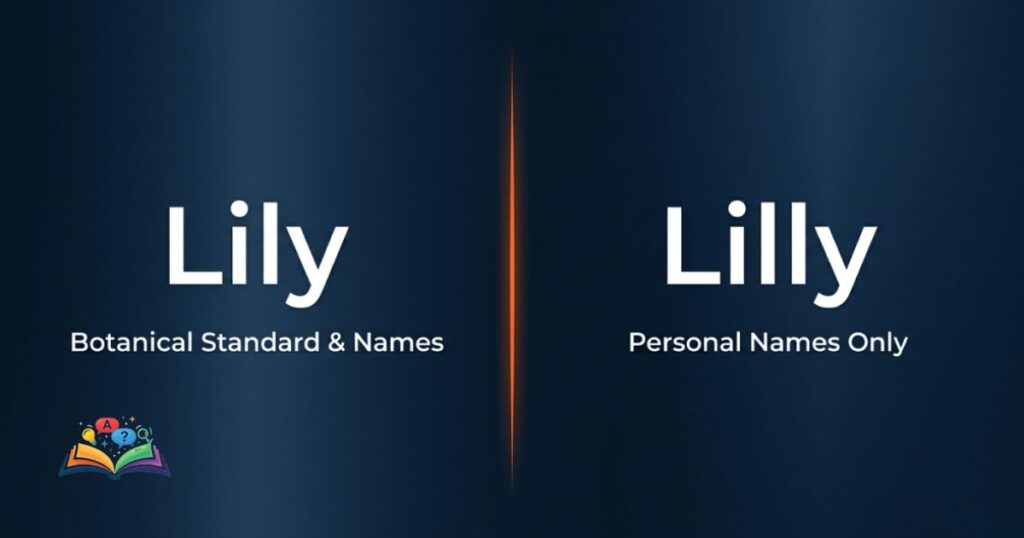
The correct spelling for the plant is always lily, with a single “l” in the middle. Spelling it with a double “l” as lilly is a mistake when discussing botany. The word comes from the Old English word “lilie,” which was taken from the Latin term “lilium.”
The scientific community, florists, and gardeners in the United States strictly use the single-l version. This rule applies to all true lilies belonging to the Lilium plant genus.
- Correct: The white lily in the garden bloomed beautifully this morning.
- Incorrect: She bought a fresh bouquet of white lilly blossoms for the kitchen table.
The Linguistic Shift: How Lily Evolved Into the Double-L Lilly Variant
While nature sticks to a single layout, human language changes over time. The second spelling variant, Lilly, became common as a surname in English history before people started using it as a first name. Surnames often doubled up on letters like “l” or “t” based on regional accents and handwriting styles in old records.
As decades passed, parents looking for unique girl names adopted these surname variations. This created a split where the plant stayed tied to its historical spelling, but the human name grew into two accepted forms. This evolution mirrors how people debate other modern language choices, such as choosing between cancelation or cancellation in American writing.
Cultural Geography: UK and Irish Naming Trends for Lily and Lilly
Naming data shows that geographic location influences how people choose to spell this name. While both versions exist across the English-speaking world, different countries show clear preferences for one over the other.
| Country | Preferred Spelling | Popularity Context |
| United States | Lily | The single-l version is a top 50 name for girls. |
| United Kingdom | Lily | Very popular, often sitting in the top 10 choices. |
| Ireland | Lilly | The double-l spelling sees higher usage here compared to the US. |
Etymology and Elegance: The Meaning Behind the Name Lily and Its Diminutive Lillian
The name represents purity, innocence, and beauty, which comes directly from the historical symbolism of the flower itself. For centuries, people have associated the blossom with grace and elegance, making it a timeless choice for a child.
The name often starts as a short nickname for Lillian, which is a traditional name with deep roots in Western culture. Over time, Lily and Lilly broke away to become independent first names rather than just short nicknames. Navigating these long-standing naming traditions can feel just as tricky as trying to master standard grammar rules, like knowing when to use a parenthesis or parenthesis in your writing.
Botanical Exceptions: Navigating Unique Spellings Like Lily of the Valley
Even though the standard flower uses a single “l,” English contains many plant names that can confuse writers. Lily of the valley is a famous example because it shares the name but actually belongs to a completely different plant family than true lilies.
When writing about these plants, you must keep the single-l rule intact. Adding an extra letter is incorrect, even for woodland plants or water-dwelling vegetation. Misspelling these terms is a common slip, much like how writers accidentally mix up peel or peal when describing sounds and oranges.
- Correct: Lily of the valley grows best in shady areas with damp soil.
- Incorrect: The garden path was lined with sweet-smelling lilly of the valley.
Onomastic Preferences of Lily vs. Lilly: Choosing Between the Single-L and Double-L for Modern Baby Names
When you are choosing a name for your daughter, both spellings are acceptable, but they send different stylistic visual signals. Parents must decide if they prefer traditional accuracy or a more modern, balanced look.
The single-l choice connects directly to nature and feels classic, while the double-l layout looks symmetrical and matches names like Milly, Tilly, or Lillyanna. For more help with tricky English terms, look at our commonly confused words guide to keep your writing sharp.

Final Clarity on the Lily or Lilly Dilemma
To keep your writing accurate, remember that the flower and the name have different boundaries. The plant is always a lily, and using the double-l spelling here is a flat-out error. For human names, both choices are real, but Lily remains the dominant and most popular version in the United States.
Mixing up these spellings will not cause massive confusion, but using the correct version shows attention to detail. It is a minor linguistic choice, similar to pausing to think if a friend is griefing or grieving after a loss. Stick to the single “l” for nature, and use your personal preference for people.
Common Questions About Lily or Lilly Spelling and Meanings
Many parents and writers have specific questions about how these two spellings operate in daily life. Read through the detailed answers below to see how regional trends and naming combinations work.
Is Lilly an Irish or British Name Variation?
Lilly is used in both Ireland and Great Britain, but it is less common than Lily. British parents strongly favor the single-l spelling for girls. In Ireland, Lilly has a longer history as a traditional family surname variation before it transitioned into a popular first name.
Can Lily or Lilly Be Used as a Short Form for Lillian?
Yes, both spellings work perfectly as a short form for Lillian. Lillian uses a double “l” in the middle, so choosing Lilly allows you to keep that same consonant pattern. However, many people still prefer to shorten it to Lily to mirror the flower.
What Are the Most Popular Middle Names That Go With Lily?
Classic, short middle names flow best with this first name. Popular choices in the United States include Lily Grace, Lily Rose, and Lily Mae. If you prefer the double-l version, Lilly Marie and Lilly Anne offer a beautiful, balanced sound.
Is Lily or Lilly Considered a Rare or Trend-Heavy Girl’s Name?
Lily is not a rare name; it has stayed highly popular in the United States for over two decades. Lilly is slightly less common, making it a good choice if you want a familiar name that stands out a little bit on a school roster.
Is the Name Lily Related to Other Languages?
Yes, the name has versions all over the world. In Spanish, the flower and name become Liliana, while in French it is written as Lys. No matter the language, the connection to the elegant blossom remains the core meaning.