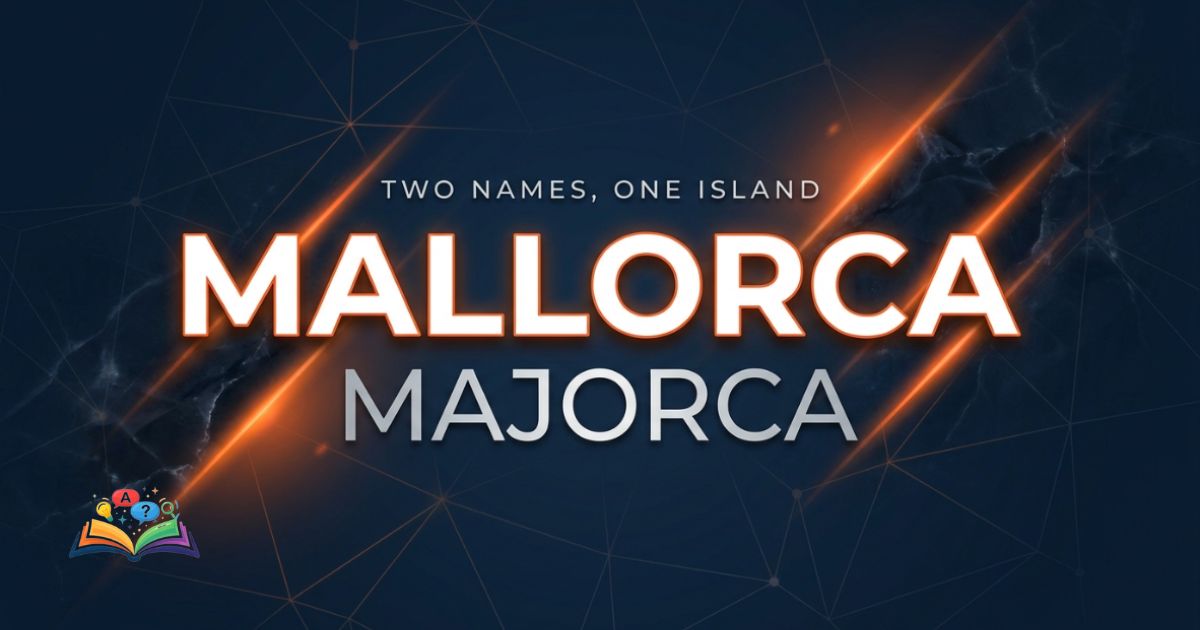
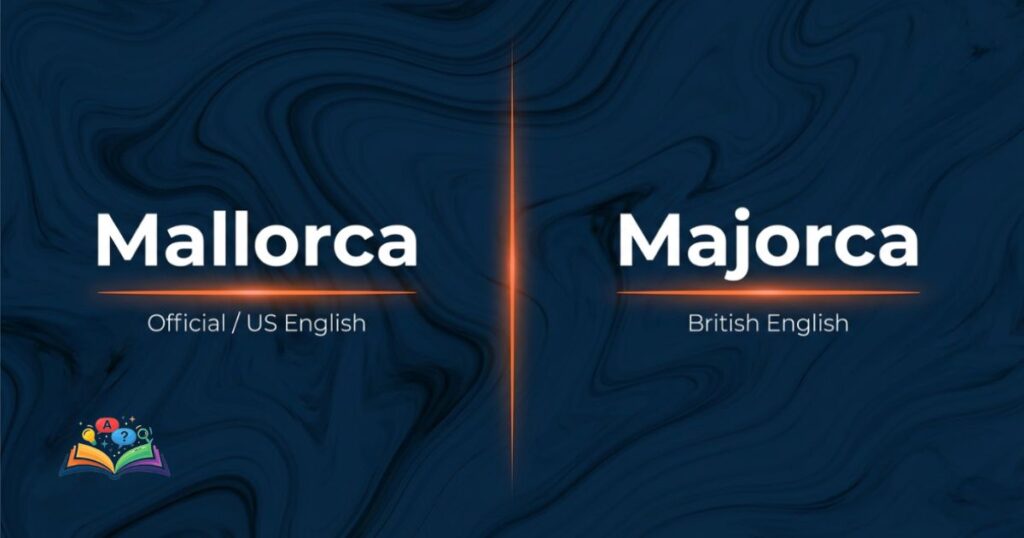
If you are confused about whether to use “Mallorca” or “Majorca,” both spellings refer to the exact same sun-drenched island off the Mediterranean coast of Spain. The difference comes down to local linguistic tradition versus traditional British English usage. While “Mallorca” reflects the official Spanish and Catalan name, “Majorca” is an anglicized spelling that became popular in the United Kingdom during the rise of mid-century tourism.
Americans traveling abroad or planning a trip often encounter both variations on travel booking platforms, news outlets, and flight engines. While both terms are widely understood around the globe, using the correct version depends on your geographical context, target audience, and travel needs.
This comprehensive guide breaks down the historical origins of the naming debate, clears up common pronunciation mistakes, and outlines how to use each spelling correctly. If you frequently struggle with English spelling inconsistencies or double-letter variations, exploring commonly confused words can help strengthen your written vocabulary across many subjects.
Pronunciation Breakdown: Saying Mallorca or Majorca Correctly
Understanding how to pronounce this famous Mediterranean destination requires a quick look at how different languages handle specific letter combinations. In Spanish and Catalan, the double “l” in Mallorca creates a “y” sound (mah-YOR-kah), while the anglicized spelling “Majorca” uses a hard “j” sound (mah-JOR-kah).
| Feature | Mallorca (Official / Spanish) | Majorca (Anglicized / UK) |
| Primary Pronunciation | mah-YOR-kah | mah-JOR-kah |
| Letter Combination | Double “ll” (sounds like “y”) | Single “j” (sounds like “j” in major) |
| Official Local Status | Official legal name in Spain | Historic British variant |
| US Usage Preference | High (Standard in US English) | Low (Mostly understood via UK media) |
This phonetic shift occurred because standard English phonetics do not naturally convert a double “l” into a “y” sound. Similar linguistic shifts occur when people confuse standard vocabulary terms like cancelation or cancellation, where regional preferences dictate double or single consonants.
Historical Origins of the Mallorca or Majorca Naming Debate
The existence of two names for one island is the result of centuries of conquest, trade, mapmaking, and modern international tourism. The name originates from the Latin phrase Insula Maior, which translates to “larger island,” naming it in contrast to neighboring Insula Minor (Menorca).
During the 18th and 19th centuries, British cartographers began anglicizing foreign place names across Europe to better fit English printing standards. When mass holiday tourism from the United Kingdom surged in the 1950s, UK travel agencies and newspapers heavily marketed package vacations to “Majorca,” cementing the “j” spelling across British culture while Spain maintained the official name “Mallorca.”
Island Geography: Is Palma Located in Mallorca or Majorca?
Navigating island geography requires distinguishing between the overall island, its municipalities, and its primary capital city. Palma is the capital city of the autonomous community of the Balearic Islands, sitting on the southwestern coast of the landmass.
Whether you write “Palma de Mallorca” or “Palma de Majorca,” you are referring to the exact same urban port city. However, international aviation registries and Spanish municipal databases exclusively recognize “Palma de Mallorca.” Much like writers who accidentally mix up basic words like site or cite when describing places, confusing Palma with the whole island can lead to booking errors.
Regional Differences: Mallorca or Majorca vs. Menorca and Ibiza
The Balearic Islands consist of an archipelago with four primary inhabited islands, each possessing its own unique identity and naming history. Mallorca is the largest island in the chain, both in physical size and population, while Menorca lies to the northeast and Ibiza sits to the southwest.
- Mallorca: 1,405 square miles; population approx. 920,000; known for diverse landscapes, wine regions, and historic architecture.
- Menorca: 271 square miles; population approx. 96,000; known for pristine beaches, prehistoric monuments, and low-key tourism.
- Ibiza: 220 square miles; population approx. 159,000; known for global nightlife, historic fortifications, and pine-covered hills.
Just as a traveler must distinguish between nearby islands, writers must carefully select accurate terms to prevent misunderstanding. For instance, mixing up similar terms like chili or chile creates confusion in culinary contexts, much like confusing Menorca with Mallorca creates confusion in travel itineraries.
Travel Searches: Searching for Mallorca or Majorca Flights and Hotels
Booking travel online requires inputting precise terms into search engines, flight aggregators, and hotel booking portals. Airline search engines rely on three-letter IATA airport codes rather than city spellings, routing all queries for this island to Palma de Mallorca Airport (PMI).
While major international hotel chains handle both spellings seamlessly, smaller local boutiques and bed-and-breakfasts in Spain index their websites primarily under “Mallorca.” To maximize search results, use the local “ll” spelling when searching for boutique villas or car rentals directly through Spanish operators. Small spelling differences matter just as much in everyday writing, like when typing staid or stayed.
Local Culture and Language Usage: Do Locals Use Mallorca or Majorca?
Navigating local cultural expectations involves understanding which languages are spoken on the island and how residents view foreign terminology. The Balearic Islands have two official languages: Catalan and Castilian Spanish, with the local dialect being Mallorquí.
Because Catalan is deeply tied to cultural identity, official road signs, government buildings, public transit maps, and educational materials exclusively use “Mallorca.” You will never see “Majorca” printed on local Spanish infrastructure. Whether learning regional place names or distinguishing between general vocabulary options like extravert or extrovert, choosing the most accurate term improves communication quality.
Media and Pop Culture: How Mallorca or Majorca Is Referenced Globally
International entertainment, film productions, and celebrity news play a massive role in shaping how public place names are recognized worldwide. British television shows, reality programs, and news broadcasts frequently use “Majorca” due to proximity and historical tourism ties.
Conversely, American publications, Hollywood productions, and international news agencies strictly adhere to “Mallorca.” News stories covering high-profile celebrity homeowners, international sailing regattas, or film shoots consistently employ the official Spanish spelling. Failing to verify precise spelling leads to errors similar to writing unkept or unkempt when describing appearance.
Final Clarity On the Mallorca or Majorca Debate
Choosing between “Mallorca” and “Majorca” comes down to regional context and personal style. If you are writing for an American audience, booking international travel, or communicating with local residents in Spain, Mallorca is the correct, official, and universally preferred choice.
If you are reading British literature, watching UK television broadcasts, or conversing with travelers from the United Kingdom, you will frequently encounter Majorca. Both words refer to the exact same island, but using “Mallorca” aligns your language with local culture and standard global usage. Applying proper spelling rules across all forms of writing ensures clear communication, much like learning tricky language pairs such as fare or fair.
Common Questions About Mallorca or Majorca Spelling and Usage
Is It Correct to Say “Mallorca” or “Majorca” When Speaking English?
Both spellings are understood in English, but “Mallorca” is preferred in modern American English and international travel contexts. “Majorca” is an anglicized spelling primarily used in British English. Using “Mallorca” aligns with the island’s official Spanish name.
Why Do British People Spell and Pronounce It “Majorca”?
British travelers and mapmakers anglicized the name during the 19th and 20th centuries, replacing the Spanish double “ll” with a “j” to fit traditional English phonetic patterns. The rise of UK package tourism in the mid-20th century popularized “Majorca” across British culture.
Is Palma Located in Mallorca or Majorca?
Palma is located on this island regardless of which spelling you use for the landmass itself. It serves as the official capital city of the Balearic Islands. Official international aviation and maritime databases list the city as Palma de Mallorca.
How Do Spanish Locals Pronounce the Name of the Island?
Spanish and Catalan locals pronounce the name as mah-YOR-kah. The double “l” produces a “y” sound in Spanish. Locals do not use the hard “j” sound (mah-JOR-kah) associated with the anglicized spelling “Majorca.”