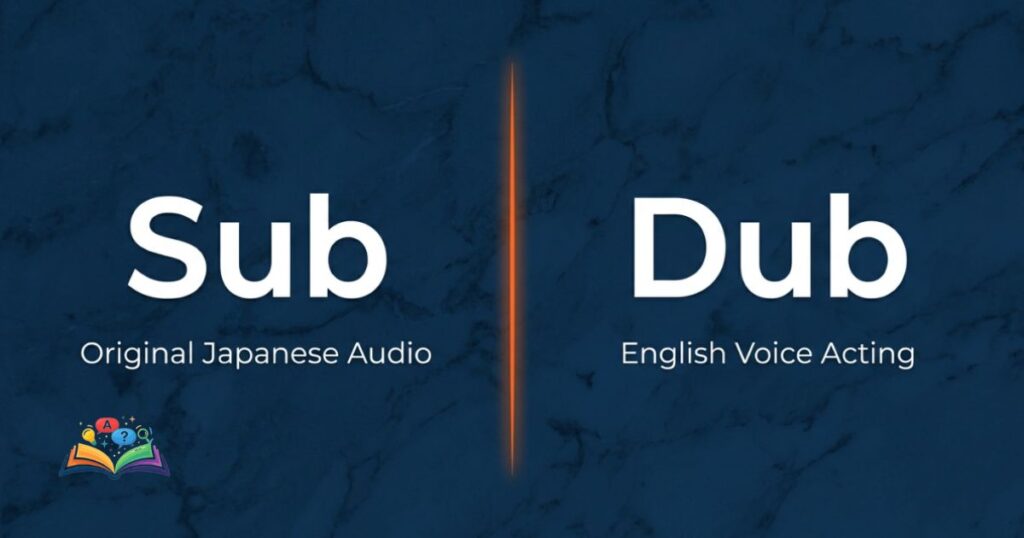
If you are starting a new anime series, the biggest decision you have to make is choosing sub or dub. This choice defines how you experience the story, the characters, and the emotional impact of the show. “Sub” refers to watching the show with the original Japanese audio and English subtitles. “Dub” means the audio has been re-recorded, or dubbed, by English-speaking voice actors.
For decades, the sub or dub debate has divided the anime community. Some viewers demand the authenticity of Japanese voice acting. Others prefer the ease of listening in English without reading text at the bottom of the screen. Both formats have distinct advantages depending on the specific show, the quality of the studio production, and your personal viewing habits.
This guide breaks down exactly what sub and dub mean in anime. We look closely at which format works best for popular shows, analyze translation accuracy, and explain how these terms have even crossed over into modern gaming and internet slang.
Analyzing Accuracy: Is Sub Or Dub Better For Preserving Japanese Nuance?
Sub is generally better for preserving Japanese nuance because it features the original audio directed by the original creators. Subtitles translate the exact cultural context, whereas dubs often alter the script to match mouth movements or localize jokes for Western audiences. This makes sub more accurate for purists.
Comparing translation accuracy is only the first step in deciding how to watch a series. The debate often shifts to how a performance makes the viewer feel. Check out how emotional authenticity and voice acting quality factor into the choice below.
Why Anime Fans Choose Sub Or Dub Based On Emotional Authenticity
Japanese voice actors undergo intense training, and their performances often carry a specific emotional weight that is hard to replicate. Fans who prefer sub argue that the original Japanese audio captures the raw emotion intended by the director. Cries, screams, and subtle vocal shifts often sound more organic in the original recording.
On the other hand, a good English dub can provide incredible emotional resonance for English speakers. Hearing a heartfelt confession or an angry speech in your native language can hit harder than reading a translation.
Assessing Voice Acting Quality When Comparing Sub Or Dub Performances
Voice acting quality varies wildly from show to show. In the 1990s and early 2000s, English dubs were notoriously rushed, leading to the stereotype that all dubs are bad. Today, English voice acting has improved massively. Studios hire dedicated, talented actors who treat the source material with respect.
When deciding between the two, consider the production era:
- Pre-2005 Anime: Japanese audio is highly recommended due to rushed English localizations.
- 2005 to 2015 Anime: Mixed quality. Many iconic English dubs exist, but Japanese remains the safest choice.
- Post-2015 Anime: Both sub and dub are consistently excellent, making it a matter of pure preference.
Should You Watch Sub Or Dub For Heavy-Hitting Shonen Anime?
Shonen anime features intense action, fast pacing, and iconic battle cries that rely heavily on stellar voice acting. The choice between Japanese and English audio can completely change the vibe of a fight scene. Let us review the best formats for some of the biggest shonen titles currently streaming.
Evaluating Sub Or Dub For Jujutsu Kaisen And Chainsaw Man
For high-energy modern hits, the sub or dub JJK conversation is highly contested. Jujutsu Kaisen has a phenomenal Japanese cast, but the English dub is praised for capturing the sarcastic, gritty tone of the characters perfectly.
Chainsaw Man follows a similar pattern. The English cast nails the chaotic, unhinged energy of the main character. The dub is highly recommended for Western viewers who want to focus on the spectacular animation instead of reading fast-moving text.
Deciding Between Sub Or Dub For Long-Running Series Like One Piece And Naruto
When asking “is Naruto dub or sub better?”, most fans suggest the English dub. The voice cast is iconic, and watching 700 episodes is much easier without reading subtitles the entire time.
If you are asking if you should watch sub or dub One Piece, the answer leans heavily toward sub. One Piece has over 1,000 episodes. The Japanese cast has been voicing these characters for over two decades, delivering unmatched consistency. The English dub is solid but took years to find its footing after a notoriously bad early adaptation.
Is Death Note Better In Sub Or Dub For Psychological Tension?
Psychological thrillers and dark fantasy anime require a completely different vocal approach than action-heavy shonen. Tension is built through whispers, dramatic pauses, and subtle vocal shifts. Read on to see how audio choices impact the heaviest, most dramatic anime series in the medium.
Comparing Sub Or Dub Attack On Titan Viewing Experiences
The sub vs dub Attack on Titan debate is intense. The Japanese audio features legendary performances, particularly the main character’s famous screams of rage. The raw, visceral emotion in the Japanese sub is often considered unbeatable. However, the English dub is highly respected and makes it much easier to follow the complex political plot without missing the incredibly detailed animation during fast-paced maneuvering scenes.
Choosing Sub Or Dub For Bleach And Neon Genesis Evangelion
Bleach features one of the most beloved English dubs of its era. This makes the sub or dub Bleach choice lean toward English for nostalgic fans, as the cast captures the cool, edgy tone of the series perfectly.
Conversely, the sub or dub Neon Genesis Evangelion discussion is tricky. The original Japanese audio is widely considered superior because it perfectly captures the deep psychological distress of the cast. The classic 90s English dub is iconic but sometimes feels melodramatic, while the modern Netflix redub is accurate but lacks the charm of the original.
Navigating Sub Or Dub For Frieren And Witch Hat Atelier
Modern fantasy series prioritize atmosphere, world-building, and quiet character moments over loud action. For a show like Frieren: Beyond Journey’s End, the sub or dub question comes down to pacing. The English dub is masterfully directed, capturing the melancholic, slow-burn nature of the story perfectly. The Japanese audio is equally beautiful, offering a serene viewing experience.
Looking forward to upcoming releases, fans are already debating the sub or dub Witch Hat Atelier choice. Given the magical, European-inspired setting, an English dub with proper accents might complement the material beautifully. However, traditionalists will always stick to the Japanese audio for initial viewings to gauge the original director’s intent.
What Sub Or Dub Means Outside Anime Contexts
Language evolves quickly, and terms that start in niche communities often bleed into mainstream culture. “Dub” has taken on an entirely new meaning for younger generations and gamers. See how these definitions differ from anime terminology below.
How Gen Z Defines Sub Or Dub In Social Slang
If you hear someone ask “what does dub slang mean?”, they are not talking about voice acting. In Gen Z slang, a “dub” is short for “W”, which stands for a “win.” If someone says “that is a dub”, they mean it is a success or a good thing. Conversely, if someone asks what “she’s a dub” means, it usually implies someone is a lost cause or a rejection, flipping the original meaning entirely.
Understanding these popular words and phrases is essential in digital spaces. You might see people debating if an outfit is bougie or boujee in the same comment section where they celebrate a quick dub or decode the latest rizz meaning.
Deciphering Sub Or Dub Terminology In Modern Gaming
What does dub mean in gaming? Just like in social slang, securing a “dub” means getting a win. This started heavily in battle royale games. When players say “let’s go get this dub”, they are rallying the team for a victory. You will not hear “sub” used in this context at all. It is a completely different linguistic branch than the audio formats used in media.
Understanding this gaming terminology is just as nuanced as knowing the difference between heads or tails in a coin toss or deciding to say aloha or mahalo on a trip to Hawaii. Other slang terms like cap or no cap and simp meaning share similar internet origins and have reshaped how gamers communicate.
Is Crunchyroll A Sub Or Dub Focused Streaming Platform?
Crunchyroll is the largest anime streaming service in the world, and it caters to both preferences. Originally, Crunchyroll was strictly a destination for subbed anime, releasing episodes with English subtitles just hours after they aired in Japan.
Today, Crunchyroll produces “SimulDubs”. This means they release the English dubbed version of an episode shortly after the Japanese version drops. If you ever question why you can’t use dub on Crunchyroll for a specific show, it usually means the English voice recording is still in production or the licensing rights belong to a different platform. Crunchyroll fully supports both formats. For more insights on digital culture, you can check out what based meaning is or what bussin meaning represents in modern media.
Final Clarity On Sub Or Dub
Choosing between sub or dub anime is entirely subjective. If you want the most authentic, unfiltered representation of the creator’s vision, the Japanese sub is the way to go. If you want a relaxed viewing experience where you can appreciate the visual art without reading text, the English dub is the perfect choice.
Do not let internet elitists dictate how you enjoy your media. The best approach is to test both formats for the first episode of a new series and stick with the cast that sounds the most appealing to your ears.
Common Questions About Sub Or Dub
What Is More Popular Among Anime Fans, Sub Or Dub?
Historically, sub has been more popular among hardcore anime fans due to translation accuracy and earlier availability. However, with the massive improvement in English voice acting over the last decade, the popularity is now split almost evenly among casual viewers in the United States.
Should I Watch Sub Or Dub First When Starting A New Anime?
You should watch the first episode in sub and the second episode in dub. This gives you a clear comparison of both voice casts. After sampling both, choose the format that feels more natural and stick with it for the rest of the series.
Is Sub Or Dub Japanese Or English Audio?
“Sub” stands for subtitled, meaning the audio is in the original Japanese with English text on the screen. “Dub” stands for dubbed, meaning the audio has been completely re-recorded by English voice actors.
Are Animes Better In Sub Or Dub Overall?
There is no objective answer. Older anime from the 1990s and early 2000s are generally considered better in sub due to poor English localization at the time. Modern anime from 2010 onward usually feature incredibly high-quality English dubs, making both options equally viable.
Why Do People Prefer Sub Over Dub?
People prefer sub over dub because the Japanese audio usually captures the original emotional intent of the director. Subtitles also offer a more direct translation of the script, avoiding the changes that dubbing studios make to match English dialogue with animated mouth movements.