Every October, millions of American homes stock up on fun-size candy bars as neighborhoods prepare for a flood of costumed visitors. Yet, despite the massive popularity of this Halloween tradition, the exact trick or treaters meaning, proper spelling, and grammatical execution often cause confusion. Many people struggle with whether to use hyphens or leave spaces between the words when writing about these holiday guests.
If you want to know the correct way to write this festive phrase, the standard form uses hyphens when describing the people or the activity itself. This guide breaks down the correct punctuation rules, historical context, and modern etiquette so you can confidently use the phrase without any guesswork.
The Linguistic Breakdown of the Trick or Treaters Meaning: Spelling, Hyphenation, and Grammar Rules
Understanding how to properly write about Halloween visitors requires a quick look at English compound modifier rules. Review the specific subheadings below to master the exact punctuation and language translations for this classic phrase.
Trick-or-Treaters vs. Trick or Treaters: Mastering the Hyphenation Rules
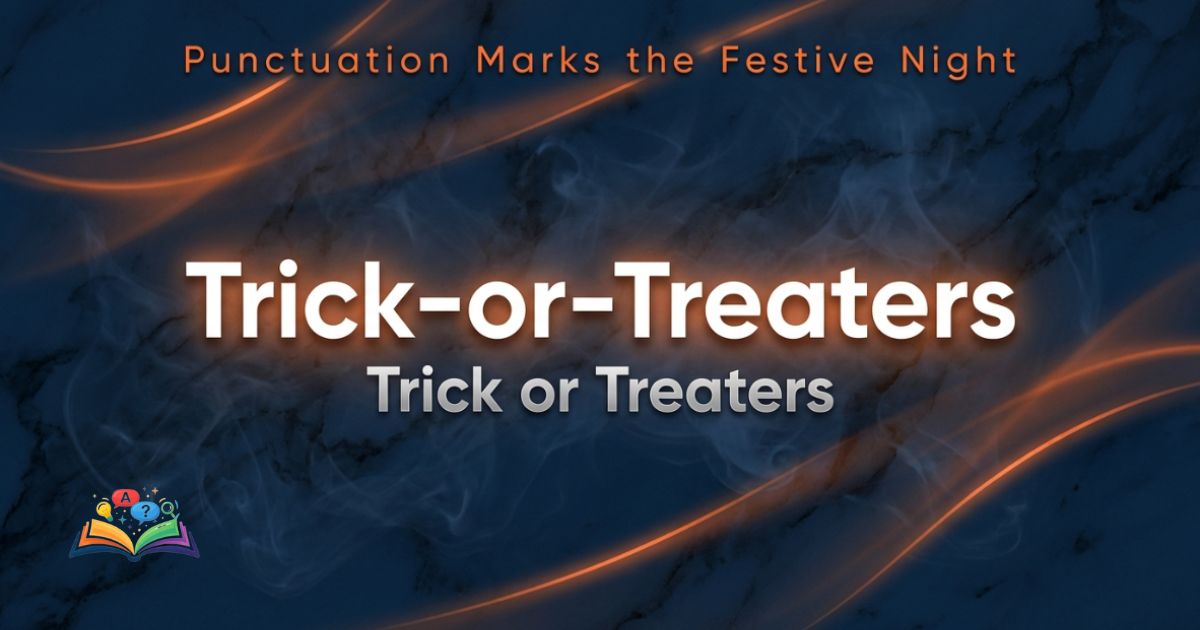
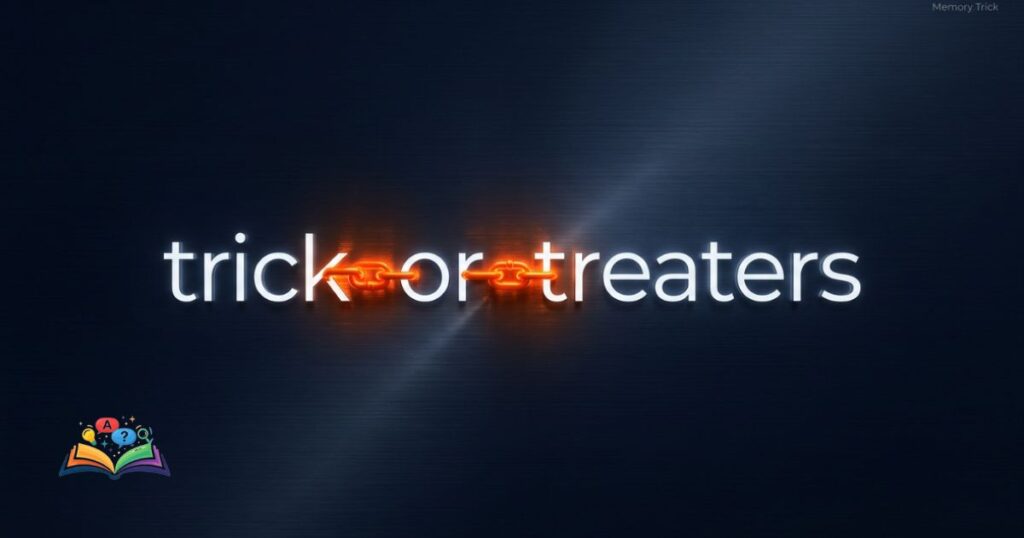
The correct spelling is trick-or-treaters with hyphens. In English grammar, when multiple words join together to act as a single noun or a single modifier before a noun, they require hyphens to show connection. Leaving the spaces open as “trick or treaters” is a common error because people confuse the spoken phrase with the written noun.
- Correct: The neighborhood was filled with eager trick-or-treaters by 6:00 PM.
- Incorrect: Several trick or treaters knocked on our front door last night.
A similar rule applies to other tricky everyday English terms, such as understanding when to use an apostrophe in masters or master apostrophe configurations.
Cross-Cultural Translations: Interpreting the Trick or Treaters Meaning in Hindi, Tamil, and Urdu
Because this custom is deeply tied to American culture, translating the phrase into other languages requires capturing the core concept rather than a literal word-for-word translation.
| Language | Conceptual Translation Meaning |
| Hindi | trick-or-treating का मतलब (हैललोवीन पर बच्चों का घर-घर जाकर मिठाई माँगना) |
| Tamil | ட்ரிக்-ஆர்-ட்ரீட்டிங் அர்த்தம் (ஹாலோவீன் அன்று குழந்தைகள் மிட்டாய் கேட்கும் வழக்கம்) |
| Urdu | ٹرک یا ٹریٹ کا مطلب (ہالووین پر بچوں کا گھر گھر جا کر مٹھائیاں مانگنا) |
When describing the tradition to speakers of these languages, it is usually explained as a festive holiday practice where children dress up in costumes and visit homes to collect candy.

Decoding Intent: What Do the Phrases “Happy Trick or Treating” and “Are You Trick or Treating” Meaning Tell Us?
Spoken phrases during the holiday carry specific social expectations and seasonal cheer. Read through the following breakdowns to understand what these expressions mean in casual conversations.
Analyzing the Conversational Context of “Are You Trick or Treating” Meaning
When someone asks “Are you trick-or-treating?” they are usually inquiring about your plans for the evening of October 31st. For children and parents, it means asking if they plan to walk around the neighborhood to gather candy. For homeowners, it is a way to ask if you plan to turn on your porch light and hand out goodies to visitors.
Understanding context in conversational phrases is just as important as knowing written distinctions, such as choosing between will or would depending on the scenario.
The Cultural Sentiment Behind the “Happy Trick or Treating” Meaning
Saying “Happy trick-or-treating!” functions as a festive holiday greeting used exclusively during late October. It is a way to wish someone a safe, fun, and successful evening of collecting sweets. It acts as a seasonal sign-off, much like wishing someone a happy holiday.
The Dark History and Evolution of the Trick or Treaters Meaning
The modern definition of a trick-or-treater is lighthearted, but the roots of the practice trace back centuries to European traditions. Long before kids wore plastic masks and carried plastic pumpkins, early versions of the practice involved “souling” and “guising” in Ireland, Scotland, and Britain. During the festival of Samhain, people believed the barrier between the physical world and the spirit world blurred. To placate roaming spirits, individuals offered food and drink.
By the Middle Ages, poor citizens, often children, walked from home to home on All Saints’ Day offering prayers for the dead in exchange for small round treats called soul cakes. When the tradition migrated to North America with Irish and Scottish immigrants in the early 20th century, the spiritual element shifted toward mischief. In the 1920s and 1930s, the “trick” aspect was literal, often resulting in minor property damage or pranks if homeowners failed to provide a treat. To curb this behavior, towns and neighborhood groups organized structured candy distributions, transforming the practice into the safe, community-focused activity celebrated across the United States today.
Setting the Guardrails: Unwritten Rules That Define the Trick or Treaters Meaning Today
To keep the holiday enjoyable for everyone, communities rely on a set of unwritten rules regarding age limits and timing. While there is no official federal law governing Halloween night, local customs dictate clear boundaries. Most suburban neighborhoods agree that the prime age for participants ranges from toddlers up to young teens around 13 or 14 years old. High school students often pivot toward costume parties rather than door-to-door collection, though polite teenagers are rarely turned away.
Timing is equally critical for a smooth evening. The activities generally kick off around sunset, which is usually between 5:30 PM and 6:00 PM across most US time zones. The unofficial cutoff time for the evening is 8:00 PM. A universally accepted rule governs the neighborhood participation: if a front porch light is turned on, the home is welcoming visitors; if the porch light is dark, the household is not participating, and visitors should skip that property entirely.
The Homeowner’s Protocol: Allocating Treats and Understanding Trick or Treaters Meaning in Practice
For hosts, managing the front door requires a balance of generosity and preparation. Homeowners must plan how much candy to buy and how to distribute it fairly to avoid running out before the evening ends. A good baseline rule is to allocate two pieces of candy per visitor. If you live in a high-traffic neighborhood with hundreds of guests, sticking to a strict one-piece-per-person policy ensures your supply lasts until the 8:00 PM cutoff.
Dietary safety has also become a major element of modern hosting. Many households now participate in the Teal Pumpkin Project, which signifies that a home offers non-food treats for children with severe food allergies. Keeping a separate bowl of small toys, stickers, glow sticks, or fun erasers allows children with dietary restrictions to participate safely without feeling excluded.
Interpreting the Subconscious: The Hidden Trick or Treaters Meaning in Dreams
Dreaming about Halloween visitors often reflects your feelings about community connection, personal boundaries, or unexpected demands on your time. In dream analysis, a group of costumed figures showing up at your door symbolizes parts of yourself that you might be hiding or personas you show to the world.
If the dream feels positive, it can point to a desire for celebration, nostalgia, or simple rewards for your hard work. However, if the dream leaves you feeling overwhelmed or anxious about running out of candy, it might indicate that you feel pressured by external demands in your waking life. It could be a sign that you are giving away too much of your personal energy without saving enough for yourself.
Final Clarity on the Practical and Cultural Trick or Treaters Meaning
Ultimately, the phrase describes more than just kids collecting candy on October 31st. It represents a unique community agreement where neighbors open their doors to celebrate creativity and sharing. Keeping your written usage accurate by using hyphens ensures your text remains clear and professional. For more assistance with tricky language guidelines, you can bookmark our correct word usage guide to keep your grammar sharp year-round.
Common Questions About the Trick or Treaters Meaning and Rules
What Is the Real Meaning and Original Purpose of the Tradition?
The phrase refers to children dressing in costumes and going door-to-door on Halloween. The original purpose was to offer protection from roaming spirits by exchanging food for peace. Over time, it shifted from a medieval religious practice into a secular community celebration focused on children.
What Age Are Kids Supposed to Stop and What Time Should They Finish?
Most children phase out of door-to-door collecting around age 13 or 14, though older kids are welcome if they are polite and in costume. The activities should conclude by 8:00 PM out of respect for neighbors who need to rest.
What Can I Give Guests That Is Not Candy?
Excellent non-food alternatives include glow sticks, holiday stickers, vampire fangs, temporary tattoos, and mini bottles of bubble solution. These options are perfect for children with food allergies.
Why Is There a Recent Decline in Local Attendance Numbers?
Many communities have seen lower traditional turnout due to the rising popularity of organized “Trunk-or-Treat” events in school or church parking lots. Incremental weather shifts and busy family schedules also contribute to fewer people walking through neighborhoods.
Is Trick-or-Treating Just an American Thing?
While it is an iconic staple of American culture, the practice is also widely celebrated in Canada, the United Kingdom, Ireland, and Australia.