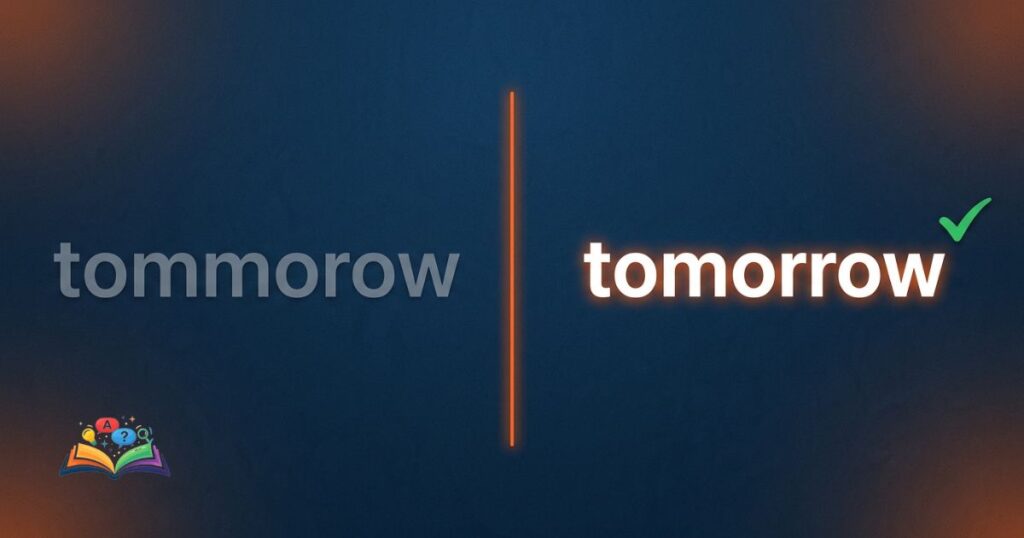
If you are unsure about “tommorow or tomorrow,” the correct spelling is “tomorrow.” The version with two “m” letters, “tommorow,” is incorrect and considered a common spelling mistake in English.
This error happens because “tomorrow” contains repeated letters, which can make the word tricky to type quickly or remember correctly. In this guide, you’ll see why “tomorrow” is the right spelling, how to avoid the mistake, and how the word is used in everyday American English.
Why So Many People Misspell Tomorrow As Tommorow
“Tomorrow” is one of the most commonly misspelled words in English. Many people accidentally write “tommorow” because the word contains repeated consonants and sounds that can confuse the eye while typing.
The confusion becomes even more common in fast texting, social media posts, and informal writing. Before looking at memory tricks and grammar rules, it helps to understand exactly why this mistake keeps happening.
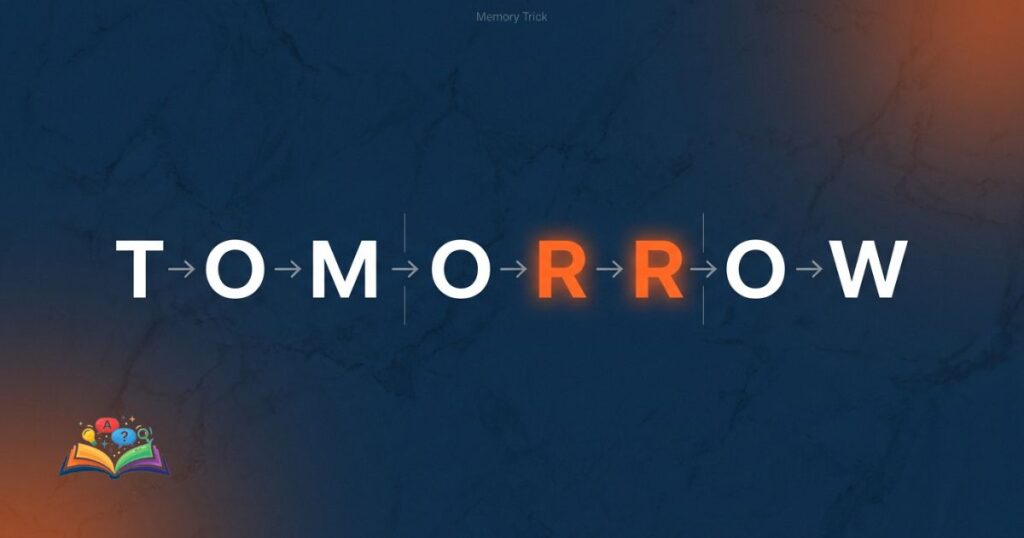
“Tomorrow” is the correct spelling. “Tommorow” is incorrect because the word uses a double “r,” not a double “m.” The standard spelling pattern in English is t-o-m-o-r-r-o-w.
Here is a quick comparison:
| Spelling | Correct Or Incorrect | Notes |
| Tomorrow | Correct | Standard English spelling |
| Tommorow | Incorrect | Common misspelling with double “m” |
Correct sentence:
- I will call you tomorrow.
Incorrect sentence:
- I will call you tommorow.
Many spelling mistakes happen because English words do not always sound exactly the way they are written. Similar confusion appears in words like separate vs seperate and receive vs recieve.
How To Spell Tomorrow Correctly Every Time
The easiest way to remember “tomorrow” is to focus on the double “r.” Many people mistakenly double the “m” instead because the word begins with “tom.”
A few simple patterns can make the correct spelling stick faster. The tips below help reduce typing mistakes and improve spelling accuracy in daily writing.
- Correct spelling: Tomorrow
- Incorrect spelling: Tommorow
A useful memory trick:
Tomorrow has one “m” and two “r” letters.
You can also break the word into parts:
- To
- Mor
- Row
Another easy method is repetition through short sentences:
- Tomorrow is my day off.
- We are leaving tomorrow morning.
- Tomorrow will be sunny.
Writers who struggle with repeated letters often confuse other English words too. You may notice similar patterns in government vs goverment and environment vs enviroment.
For a broader list of confusing spellings, check this guide on commonly confused English words.
Tomorrow Spelling And Meaning In English
The word “tomorrow” refers to the day after today. It is commonly used in conversations, schedules, planning, weather forecasts, and daily communication across the United States.
Besides spelling, many people also search for the exact meaning and proper usage of the word. The examples below show how “tomorrow” works naturally in English sentences.
Tomorrow Means The Day After Today
“Tomorrow” is an adverb and sometimes a noun.
Examples:
- We are flying to New York tomorrow.
- Tomorrow is going to be busy.
- I will finish the project tomorrow afternoon.
In simple terms:
| Word | Meaning |
| Tomorrow | The next day after today |
Tomorrow In Everyday American English
Americans use “tomorrow” constantly in both casual and professional communication.
Common phrases include:
- See you tomorrow
- Tomorrow morning
- Tomorrow night
- Starting tomorrow
- By tomorrow
The word appears in emails, text messages, school assignments, weather reports, and business conversations.
Confusing vowels and repeated letters also cause mistakes in words like which vs wich and their vs thier.
Tomorrow Spelling In British English And American English
Many English learners wonder if British English spells “tomorrow” differently. The answer is simple: the spelling stays the same in both American and British English.
Pronunciation may vary slightly by accent, but the written form never changes. The sections below clear up this confusion.
Is Tomorrow Spelled Differently In The UK?
No. Americans and British speakers both write the word as:
- Tomorrow
There is no accepted spelling variation such as:
- Tommorow
- Tomorow
- Tumarrow
Pronunciation Differences Between Countries
Americans usually pronounce the word like:
- tuh-MAHR-oh
Some British accents may sound softer or quicker, but the spelling remains identical.
This happens with many English words. Pronunciation changes across regions, while spelling often stays standardized.
You can see similar spelling confusion in until vs untill and occasion vs occassion.
Why Tomorrow Is Considered A Tricky Word To Spell
Certain English words become difficult because they contain repeated consonants, silent patterns, or uncommon letter combinations. “Tomorrow” fits into that category.
People often type the word from memory instead of carefully checking each letter. That is usually when “tommorow” appears.
Other Common Spelling Mistakes Similar To “Tomorrow”
English contains many words that confuse writers because of doubled letters or pronunciation habits.
Examples include:
| Incorrect | Correct |
| Definately | Definitely |
| Occured | Occurred |
| Wellcome | Welcome |
| Openning | Opening |
You can compare these common errors here:
One reason “tomorrow” causes trouble is the double “r.” English spelling rules are not always predictable, especially when repeated consonants appear in the middle of words.
Common Grammar And Usage Mistakes With Tomorrow
Besides spelling mistakes, people sometimes misuse “tomorrow” in sentences or punctuation. Most grammar errors happen when the word is used awkwardly in time expressions.
The examples below show the most common issues and the correct way to use the word.
Correct:
- Tomorrow is Tuesday.
- I will start tomorrow.
- We are meeting tomorrow morning.
Incorrect:
- Tomorrow’s Tuesday?
- I start in tomorrow.
- We meeting tomorrow.
“Tomorrow” usually works as a time expression without extra prepositions.
Another mistake is overcomplicating the spelling with unnecessary letters, similar to errors in publicly vs publically and develop vs develope.
Tomorrow In Songs, Pop Culture, And Entertainment
The word “tomorrow” appears frequently in entertainment because it represents hope, the future, and anticipation. Songs, TV series, books, and movies often use the word emotionally.
Search trends also show that many people look for “Tomorrow” because of pop culture references rather than spelling questions.
Popular searches include:
- Tomorrow song
- Tomorrow K-drama
- Tomorrow weather
- Tomorrow short form
One well-known example is the song “Tomorrow” from the musical Annie, famous for the line:
“The sun’ll come out tomorrow.”
The word is also common in inspirational titles because it symbolizes a new beginning or a future opportunity.
Words People Commonly Confuse With Tomorrow
“Tomorrow” is sometimes mixed up with related time words because they all refer to future events. While the meanings connect loosely, they are not interchangeable.
The comparisons below help separate these terms clearly.
| Word | Meaning |
| Tomorrow | The day after today |
| Future | Time that has not happened yet |
| Tonight | The evening of the current day |
| Yesterday | The day before today |
Correct usage:
- Tomorrow we leave for Chicago.
- The future looks promising.
Incorrect usage:
- Future we leave for Chicago.
People who confuse “tomorrow” with other words also commonly struggle with patterns like transferred vs transfered and congratulations vs congradulations.
Final Clarity On Tommorow Or Tomorrow
The correct spelling is “tomorrow.” The spelling “tommorow” is incorrect because the word requires one “m” and two “r” letters.
This mistake is common because English spelling patterns can feel inconsistent, especially with repeated consonants. A simple way to remember the correct form is this:
Tomorrow = one “m,” two “r” letters.
Using the correct spelling improves writing clarity in emails, school assignments, social media posts, and professional communication.
Common Questions About Tommorow Or Tomorrow
What Do You Mean By Tomorrow?
“Tomorrow” means the day after today. It refers to the next calendar day.
Which Is Correct, Tomorrow Or Tommorow?
“Tomorrow” is correct. “Tommorow” is a misspelling.
Why Does Tomorrow Have Two R’s?
The standard English spelling includes a double “r” based on the historical formation of the word.
Why Is Tomorrow So Hard To Spell?
People often confuse the repeated consonants and accidentally double the “m” instead of the “r.”
How Do You Spell Tomorrow In British English?
British English uses the same spelling as American English: “tomorrow.”
Is It Correct To Say “Tomorrow”?
Yes. “Tomorrow” is a standard and correct English word used in daily communication.