Missing a lunch meeting or setting an alarm for the wrong side of the day is an incredibly frustrating experience. This widespread issue happens because the 12-hour clock system resets its designators at the exact moment of midday and midnight. Getting confused by 12am or 12pm is a standard hurdle for anyone scheduling time across digital platforms in the United States.
This guide provides a straightforward breakdown of how the 12-hour clock operates. You can gain total clarity on exactly which term represents noon and which one represents midnight. Understanding these rules ensures your calendars, business meetings, and travel itineraries remain perfectly organized.
Just like mastering correct word usage in professional documents, selecting the right time marker prevents miscommunication. Let’s look at the baseline rules to keep your scheduling accurate.
The Instant Cheat Sheet for Identifying 12am or 12pm Right Now
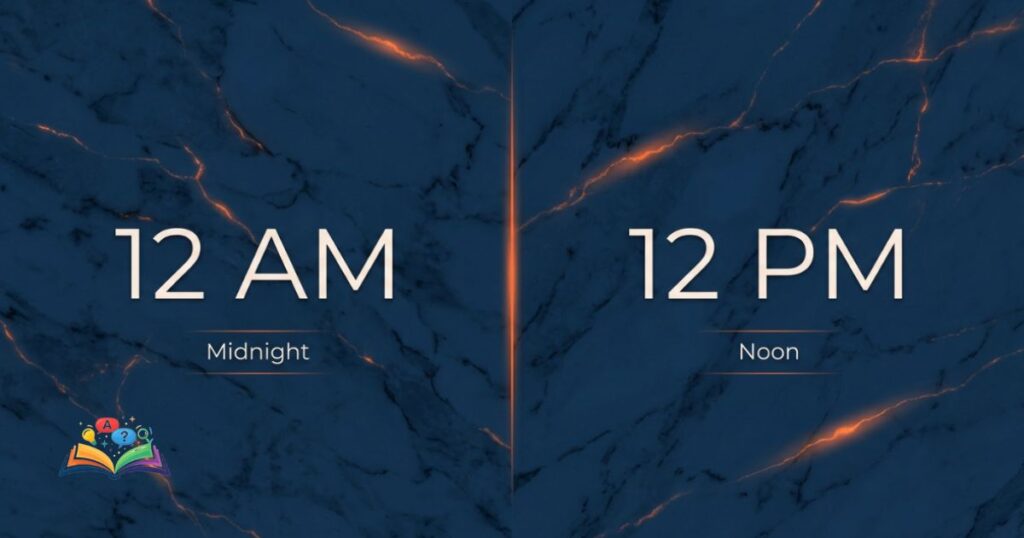
12pm is noon (midday) and 12am is midnight (the start of a new day). To quickly remember the difference, associate the “p” in 12pm with the post-midday lunch hour and afternoon, while the “a” in 12am stands for the very beginning of the morning cycle at midnight.
| Time String | Common Name | Day or Night | Real-World Context |
| 12:00 AM | Midnight | Night | The absolute start of a calendar day |
| 12:00 PM | Noon / Midday | Day | Standard lunchtime across the United States |
When managing disorganized or unorganized schedules, time clarity is vital. Refer back to this table whenever a digital form asks for a precise midday or midnight submission.
Deciphering the Day and Night Boundaries of the 12-Hour Clock
The 12-hour clock divides the 24-hour day into two distinct blocks. The first block runs from midnight to noon, and the second block runs from noon to midnight. This division creates a confusing pivot point right at the twelfth hour.
This system is not a matter of regional preferences, like the regional spelling variants like mom or mum debate. It is a standardized global system with fixed definitions.
- Correct Usage: The corporate office closes for lunch at 12:00 pm.
- Incorrect Usage: The moon was bright in the sky at 12:00 pm.
Because 12:00 pm sits exactly on the border of the afternoon, it represents full daylight. Conversely, 12:00 am sits in complete darkness, representing the dead of night.
The Horological Science Behind Why 12pm Follows 11am
The system relies on specific math, which avoids the typical confusion seen in transatlantic linguistic debates like math or maths. The abbreviations AM and PM stand for Latin phrases that describe the position of the sun relative to the meridian line.
- AM (Ante Meridiem): Translates to “before midday.”
- PM (Post Meridiem): Translates to “after midday.”
Because noon is the exact moment the sun crosses the meridian, it cannot technically be before or after itself. However, digital clocks switch to the PM designation at 12:00:00 pm because every single microsecond that follows that moment is officially after midday. Therefore, 12:00 pm immediately follows 11:59 am.
Calculating Time Intervals and Understanding Duration in 12-Hour Formats
Calculating the duration between these two markers requires a bit of mental flipping. Deciding between these options is a precise binary choice, unlike the nuanced while vs whilst distinction found in literature.
If you count from 12:00 am to 12:00 pm, exactly 12 hours have passed. A full 24-hour cycle requires moving from 12:00 am to the next 12:00 am.
Corporate legal teams spend hours choosing will or would for contract language to minimize ambiguity. The same precision must apply to time tracking. When an insurance policy states it is active from 12am to 12am, it means the coverage spans an entire 24-hour calendar day.
Real-World Applications Where Subsecond Time Accuracy Matters
In the United States, banking systems, airline reservation platforms, and medical registries rely on perfect time input. Getting the time wrong on a business contract can lead to issues that require checking if your invoices have been financial terms like payed or paid on time.
Consider the transportation sector:
- A flight scheduled for 12:00 am departs at midnight. Passengers who arrive at the airport at night thinking it is noon will miss their flight.
- Banking deposits submitted at 12:01 am count for the next business day, whereas a deposit at 11:59 pm counts for the current day.
Formatting times correctly avoids the messy look of improper punctuation, similar to the trouble of punctuating masters or master with an apostrophe. It preserves professional clarity.
Regional Time Zone Variations and the Unique Case of 12pm IST
International business introduces extra layers of complexity. For example, 12pm Indian Standard Time (IST) represents midday in India. For a professional operating on Eastern Standard Time (EST) in New York, 12pm IST translates to 1:30 am or 2:30 am depending on daylight saving time modifications.
Planning travel that spans understanding farther or further distances across states requires exact time records. Always verify the local time modifier when scheduling across international borders to prevent missed video conferences.

Mnemonic Devices and Cognitive Hacks for Instant Time Verification
You can use simple memory tools to keep these terms straight without guessing. Memory hacks eliminate the need to look up definitions during busy workdays.
- The Lunch Association: Link the “P” in PM to “Pork chops” or “Pizza” eaten at lunch time.
- The Morning Association: Link the “A” in AM to “Awake” in the dark or “After midnight.”
Using these quick mental triggers ensures you can file documents, set morning alarms, and organize group chats flawlessly.
Final Clarity on 12am or 12pm and Smarter Structural Alternatives Like 24-Hour Military Time
To remove all potential human error, many industries drop the 12-hour clock entirely. Military branches, aviation networks, and emergency services use the 24-hour clock system to guarantee safety.
In the 24-hour system, 12:00 is noon, and 00:00 (or 24:00) is midnight. There are no letters to misinterpret, which completely eliminates the risk of an accidental twelve-hour scheduling mistake.
Common Questions About Navigating 12am or 12pm Ambiguity
Clear up any lingering confusion by reviewing these specific edge cases. The following answers address technical systems, traditional guidelines, and common hardware glitches. Review the subsections below to protect your schedules from errors.
Is 12.00 am Considered Already Morning or Still Night?
12:00 am is technically considered the very start of the morning cycle. Even though it is completely dark outside, it marks the exact beginning of a new calendar date. Any event scheduled at this time takes place as the night transitions into a new day.
Why Is 12:00 PM Midnight Frequently Swapped on Legacy Digital Devices?
Older digital hardware and basic alarm clocks sometimes mislabel midnight as 12:00 pm due to simplified internal software logic. Early programming systems occasionally struggled to switch the meridiem indicator exactly at the 12-hour strike, creating lasting consumer confusion.
What Does the Specific Term 12 12am Symbolize in Technical Timelines?
The phrase 12 12am is usually a typo or a poorly formatted digital timestamp found in server log files. It generally indicates that a system is trying to display 12:12 am, but lacks the proper colon separator required for human readability.
Should You Write 12 Noon and 12 Midnight Instead of Using Ambiguous PM Symbols?
Yes, writing 12 noon and 12 midnight is highly recommended for official business documents, legal contracts, and event invitations. Using the explicit words instead of AM or PM symbols completely removes the chance of an attendee misinterpreting your schedule.
Is 12pm Considered Morning or Afternoon?
12pm is considered the exact transition point into the afternoon. Because it marks noon, any time following this exact moment is afternoon, making it incorrect to classify 12pm as part of the morning cycle.