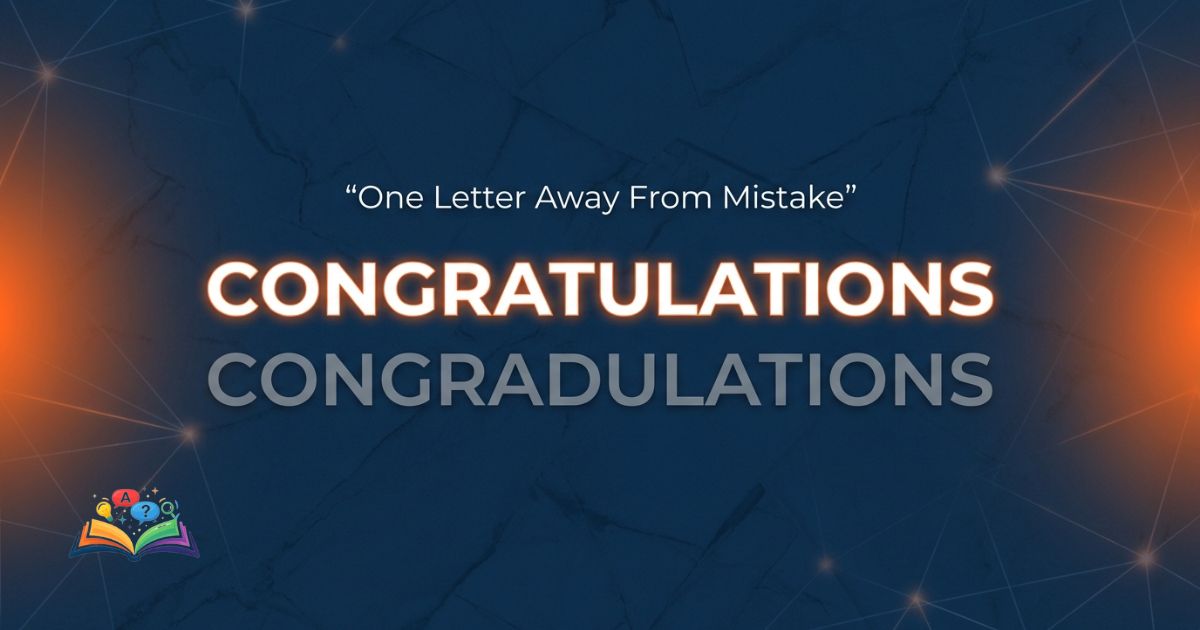
If you keep second-guessing “congratulations” or “congradulations,” the correct spelling is congratulations. The version with a “d” is a common spelling mistake caused by pronunciation confusion.
Many people say the word quickly, which makes the middle sound closer to “grad” than “grat.” That is why “congradulations” shows up in texts, social posts, emails, and even greeting cards.
This guide explains why “congratulations” is correct, why “congradulations” is wrong, and how to avoid this mistake in everyday writing.
Why People Commonly Misspell Congratulations As Congradulations
“Congratulations” is the correct spelling. “Congradulations” is incorrect because the word comes from “congratulate,” which uses the letters “grat,” not “grad.” The mistake usually happens because spoken English can blur the “t” sound.
English spelling mistakes often happen when pronunciation and spelling do not perfectly match. That is also why words like occurred vs occured and opened vs openned confuse many writers.
Here is why “congradulations” feels natural to some people:
- The “t” sound becomes softer in fast speech
- People associate “grad” with graduation
- Autocorrect sometimes misses the error
- Social media slang encourages fast typing
Correct usage:
- “Congratulations on your new job.”
- “Congratulations, you passed the exam!”
Incorrect usage:
- “Congradulations on your promotion.”
- “Congradulations to the happy couple.”
Where The Word Congratulations Comes From
The word “congratulations” comes from the verb “congratulate,” which has Latin roots connected to expressing joy or praise for someone’s success.
The key part is “grat,” which relates to gratitude, pleasure, or goodwill. That spelling pattern appears in words such as:
- Gratitude
- Grateful
- Congratulate
- Congratulations
There is no historical or grammatical reason for replacing the “t” with a “d.” Similar spelling confusion also appears in words like develop vs develope and welcome vs wellcome, where people add or change letters based on sound instead of standard spelling rules.
How To Spell Congratulations Correctly Every Time
Spelling “congratulations” correctly gets easier once you focus on the base word “congratulate.” That root keeps the “t” sound, even when the word becomes longer.
The sections below show practical ways to remember the correct spelling and avoid the most common letter mistakes people make.
Easy Memory Tricks For Remembering “Congratulations”
A few simple tricks can stop this spelling mistake from happening again.
Think Of The Root Word
Start with “congratulate.”
If you can spell:
- Congratulate
Then you can spell:
- Congratulations
Focus On “Grat,” Not “Grad”
The middle section is:
- GRAT
Not:
- GRAD
A quick memory phrase:
“Be grateful with GRAT.”
Break The Word Into Parts
Split the word into chunks:
- Con
- Grat
- Ula
- Tions
This method helps many people avoid typing errors, especially in long words like transferred vs transfered.

The Most Common Letter Swaps In Congratulations
“Congradulations” is not the only incorrect version. Several misspellings appear online every day.
| Incorrect Spelling | Correct Spelling |
| Congradulations | Congratulations |
| Congrajulations | Congratulations |
| Congratualtions | Congratulations |
| Congratulatons | Congratulations |
| Congradulation | Congratulations |
These errors happen for the same reason people confuse words like label vs lable and opening vs openning. English spelling often includes silent patterns and doubled letters that are easy to overlook.
Congratulations Vs Congratulation: Which One Fits The Sentence?
Most of the time, “congratulations” is the natural and correct choice in modern English. The singular form “congratulation” exists, but native speakers rarely use it alone in casual conversation.
Correct examples:
- “Congratulations on your graduation.”
- “Congratulations to the winners.”
Less natural:
- “A congratulation to you.”
The plural form sounds more complete because it expresses multiple good wishes at once. This pattern is common in English expressions.
You can compare this with other grammar-related spelling patterns covered in common English spelling mistakes, where word forms often create confusion.
Congrats Or Congratulations: Which Sounds More Natural?
Both “congrats” and “congratulations” are correct, but the tone changes depending on the situation.
Use “congrats” for casual settings:
- Text messages
- Social media comments
- Friendly chats
Example:
- “Congrats on your new apartment!”
Use “congratulations” for formal or professional situations:
- Work emails
- Award announcements
- Wedding cards
- Academic achievements
Example:
- “Congratulations on receiving the Employee of the Year award.”
This is similar to choosing the correct tone in spelling-sensitive words like prove vs proove and echoes vs echos, where standard English usage matters more in professional writing.
Common Spelling Mistakes Related To Congratulations
Words with long endings and blended sounds often create spelling confusion. “Congratulations” is one example, but several other English words follow the same pattern.
Here are some similar mistakes people frequently make:
| Wrong | Correct |
| Congradulations | Congratulations |
| Whisk spelled as “wisk” | Whisk |
| Bareable | Bearable |
| Occured | Occurred |
| Openned | Opened |

If spelling patterns regularly trip you up, these guides may help:
One common theme connects these mistakes: people often spell words based on sound instead of established spelling structure.
Final Clarity On Congratulations Or Congradulations
The correct spelling is always congratulations. “Congradulations” is a misspelling caused by pronunciation habits and typing shortcuts.
A quick way to remember the difference is to focus on the root word “congratulate.” If the base word uses “grat,” the longer form keeps it too.
Before sending an email, posting online, or signing a greeting card, take one extra second to check the spelling. Small spelling mistakes can stand out more than people expect, especially in professional or formal situations.
Common Questions About Congratulations Or Congradulations
Is It Congratulations Or Congradulations?
“Congratulations” is correct. “Congradulations” is a misspelling and should be avoided in formal and casual writing.
Why Is Congradulations Incorrect?
It is incorrect because the original word is “congratulate,” which uses “grat,” not “grad.”
Is “Congrats” Grammatically Correct?
Yes. “Congrats” is an informal shortened version of “congratulations.”
Can I Use “Congratulation” Instead Of “Congratulations”?
You can, but it sounds less natural in most modern English conversations. Native speakers usually prefer “congratulations.”
Why Do So Many People Spell Congratulations Wrong?
People often spell it based on pronunciation. Fast speech can make the “t” sound resemble a “d” sound.